


Ready to jump into the world of self-employment? The simplest and most popular way to do it in the UK is by setting yourself up as a sole trader. The good news is, it's refreshingly straightforward. All you need to do is let HMRC know you're self-employed by registering for Self Assessment.
It's a free online process that usually takes less than an hour. You'll set up a Government Gateway account, punch in some personal and business details, and you're on your way. Just make sure you get this done by the 5th of October in your business's second tax year to avoid any penalties.

Choosing to be a sole trader is a massive step. It's the go-to business structure for a reason – it’s quick, easy, and keeps the paperwork to a minimum. This makes it the perfect launchpad for freelancers, consultants, and anyone starting a small business who wants to focus on their work, not on complicated legal setups.
The fundamental concept is simple: you are the business. There’s no legal separation between your personal finances and your business, a principle known as unlimited liability. While this keeps things simple, it’s a double-edged sword. It means you are personally on the hook for any debts your business racks up.
The sole trader route is incredibly well-trodden. With nearly 2.9 million sole proprietorships operating across the UK, it’s by far the most common way to do business.
The main reason for its popularity is the sheer ease of getting started. Unlike setting up a limited company, you don't have to deal with Companies House. Your one legal must-do is to tell HM Revenue and Customs (HMRC) that you're in business by registering for Self Assessment.
This simple structure lets you pour your energy into your craft rather than getting bogged down by admin. For a wider look at getting off the ground, our guide on how to start a business in the UK provides some great context.
Here's a quick comparison to highlight the fundamental differences between operating as a sole trader and a limited company in the UK.
This table should give you a clear, at-a-glance view of the two main paths. While being a sole trader is simpler, a limited company offers more protection, which might become more important as your business grows.
Before you hit that 'register' button, it pays to get your head around the day-to-day realities of being a sole trader. Your main responsibilities will boil down to three key things:
The big takeaway here is that the initial simplicity demands ongoing diligence. Getting into the habit of good record-keeping from day one isn't just a nice-to-have; it's the foundation for a stress-free life as a self-employed professional.
Before you even think about heading over to the HMRC website, spend ten minutes getting your details in order. Honestly, it'll make the whole process of registering as a sole trader ridiculously smooth. Think of it as a pre-flight check; having everything to hand turns a potentially frustrating task into a simple job you can tick off in one go.
This little bit of prep helps you sidestep those classic mistakes that have new business owners scrambling for documents halfway through the form. The aim here is to get it all done confidently, without having to stop and start.
You’ll need a few key bits of information ready. Most of it is pretty straightforward, but it’s always best to have them jotted down or open in another tab before you start.
Here’s exactly what to have on standby:
This is the official login page you'll be using to either sign in or create a new Government Gateway account.
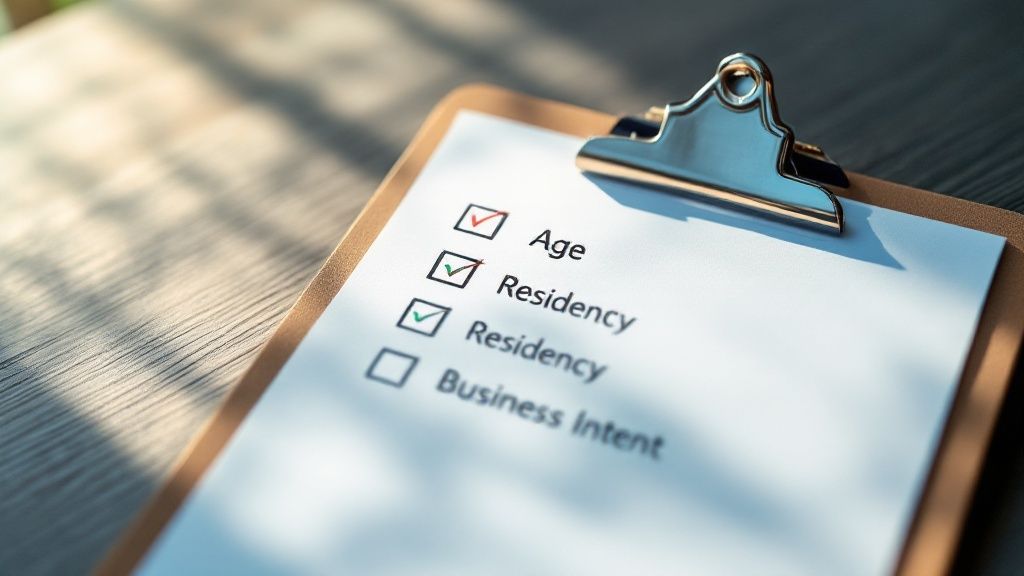
Having your details ready at this stage is essential. The system uses them to verify your identity before you can get on with the actual registration.
Next up, you’ll need to share some basic info about your new venture. This just gives HMRC a clear picture of what you’ll be doing.
You will be asked for:
The process of telling HMRC is completely free, but it's a non-negotiable step to make sure your tax and National Insurance records are set up correctly right from the beginning.
A final tip is to think about your finances early on. While it’s not a legal requirement, opening a separate bank account for your business is something I always recommend. It keeps your records clean and makes sorting out your tax a whole lot simpler down the line. Our guide on how to set up a business bank account has some practical advice on this.
Right, with all your information gathered, it's time to tackle the main event: getting yourself registered online with HMRC. This is where you officially tell the government you’re flying solo and self-employed. It’s all done through the Government Gateway, and while that might sound a bit daunting, it's really just a box-ticking exercise.
The whole point is to get you set up for Self Assessment, the system you'll use to report your earnings and pay your tax each year. By doing this yourself, you're not just registering your business; you're taking the first big step in managing your own finances and saving a few quid on accountant fees from the get-go.
First things first, you'll need a Government Gateway user ID. If you've ever filed a personal tax return online or had a nosey at your state pension forecast, chances are you already have one. If so, brilliant! You can just sign in with your existing details.
If not, no drama. You’ll need to create a new account. It’s a simple case of providing your email address, creating a password, and then popping in the confirmation code they send you to verify your email.
Once you’re in, they'll ask you to set up recovery options and then prove your identity. This is just a standard security check to make sure it's really you.
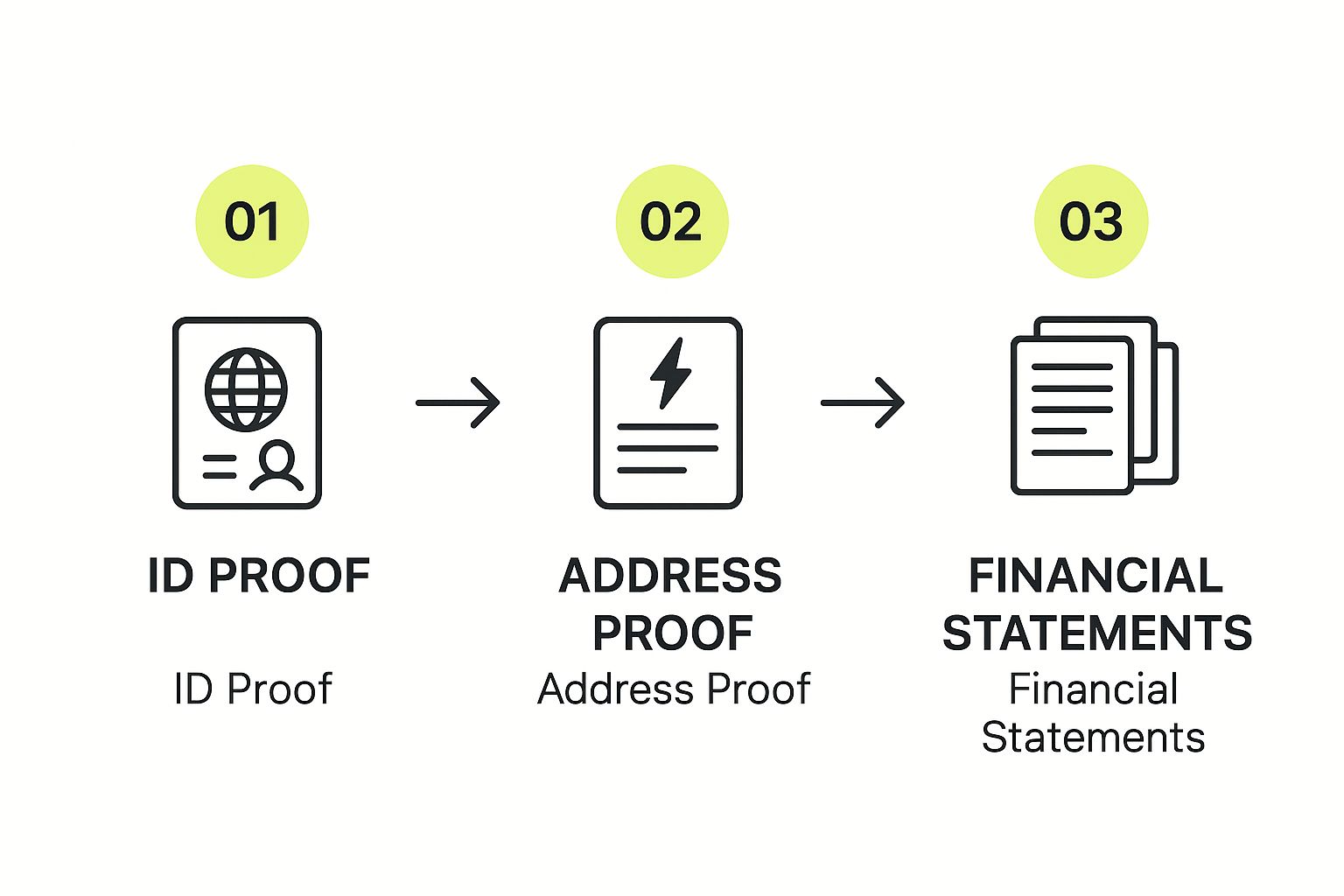
As you can see, HMRC typically asks for details from two different sources to verify who you are. This could be your UK passport and a recent P60 or payslip, for example. Just have a couple of these handy before you start.
Once you're logged in and your identity is confirmed, the system will guide you to the section for registering for Self Assessment. The online form will ask for all those details you gathered earlier, like your business start date and what you'll be doing.
A common trip-up is selecting the right business category. The options can feel a bit vague, but don't overthink it. Just choose the one that’s the closest match to what you do. For instance, if you’re a freelance graphic designer, something like ‘artistic creation’ or even ‘other professional, scientific and technical activities’ would be absolutely fine. HMRC uses this for statistical purposes; they're not going to audit you based on this choice.
The key is simply to be honest and accurate. The details you enter here become the foundation of your tax record, so it’s worth double-checking things like your National Insurance number and business start date. A simple typo can cause annoying delays down the line.
While you're doing this, you're also setting the stage for your future tax submissions. It’s worth remembering that HMRC is pushing everyone towards digital record-keeping. You can get a head start by understanding what's coming in our guide on Making Tax Digital for Self Assessment, which breaks down the upcoming changes.
After you've filled in all the sections and hit that submit button, your job is pretty much done. You should see a confirmation pop up on the screen – I always recommend taking a quick screenshot of this for your own records, just in case.
Now, you just have to wait for the postman. HMRC will send you a welcome pack containing your Unique Taxpayer Reference (UTR) number. This ten-digit number is massively important. You'll need it for pretty much any future contact with HMRC and, crucially, for filing your tax returns.
Here’s a rough timeline you can expect:
When that letter arrives, keep it somewhere safe. So many new sole traders misplace it, only to have a frantic search for it when tax season rolls around. Once you have that UTR, you're officially registered and good to go.
Getting your Unique Taxpayer Reference (UTR) number through the post feels like a real milestone. But honestly? That’s just the starting gun. Now the real work of running your business begins, and getting into good habits from day one is the secret to staying compliant, avoiding last-minute stress, and keeping your finances healthy.
Your most important duty, by far, is meticulous record-keeping. This isn't just about being organised – it's a legal requirement. You absolutely must keep accurate, up-to-date records of all your business sales and expenses. That means every invoice you send out, every receipt for stuff you buy, and all your business bank statements.
Once you're registered, getting your head around the bookkeeping basics for small business is your top priority. Trust me, this diligence pays off massively when it's time to handle your taxes. Good records make filing your Self Assessment a straightforward job, not a frantic scramble for crumpled receipts you shoved in a drawer months ago.
As a sole trader, you're now in charge of paying your own tax and National Insurance (NI). This is probably the biggest mental shift from being an employee, where tax just disappears from your payslip thanks to PAYE.
Your main obligations are:
These are all calculated and paid through your annual Self Assessment tax return. A solid piece of advice? Get into the habit of setting aside a chunk of every payment you receive—a good rule of thumb is 25-30%—into a separate bank account. That way, the money is ready and waiting when your tax bill lands. No nasty surprises.
Every year, you need to tell HMRC about your earnings by filing a Self Assessment tax return. The UK tax year runs from 6th April to 5th April. The deadline to file your return online and pay any tax you owe is 31st January the following year.
Missing this deadline means an instant £100 penalty from HMRC, and the charges just keep racking up the longer you delay. It’s one of the easiest ways to get on their bad side, so always, always aim to file well before the deadline.
The self-employed community is a massive part of the UK economy. In the first quarter of 2025, there were around 4.4 million self-employed people, the vast majority of whom are sole traders like you. During the pandemic, the government's Self-Employment Income Support Scheme paid out a total of £14.5 billion to this vital sector, which really shows its importance.
To help you stay on track, here's a quick summary of the key dates and thresholds you need to be aware of.
Keeping these dates circled in your calendar is non-negotiable for a smooth, penalty-free year.
As your business grows—which is the goal, right?—you also need to keep a close eye on your turnover for Value Added Tax (VAT). If your total VAT-taxable turnover goes over the government’s threshold in any rolling 12-month period, you are legally required to register for VAT.
This is a big step. It means you’ll have to start charging VAT to your customers and submitting regular VAT returns to HMRC. To get a better handle on this, you can learn more about what the VAT registration threshold is in our detailed guide.
Staying on top of these duties from the outset will save you countless headaches down the line.
Learning from the mistakes others have made is one of the smartest things you can do when you’re figuring out how to register as a sole trader. While the process itself isn't rocket science, there are a few common tripwires that can cause a world of unnecessary stress and delays.
Getting it right from the very beginning will make your entire business journey that much smoother.
One of the easiest traps to fall into is simply missing the registration deadline. You have to tell HMRC you’ve started trading by 5th October in your business's second tax year. When you're flat out trying to get your new venture off the ground, it's a date that can easily slip your mind, but missing it means automatic penalties.
Do yourself a favour: the very day you make your first sale or buy your first bit of stock, stick a reminder in your calendar. It’s a simple action that can save you a costly headache down the line.
Another classic blunder is muddling up your business and personal finances. There's no law saying you must have a separate business bank account as a sole trader, but trust me, mixing your weekly shop with your business income is a recipe for disaster when your tax return is due. It makes spotting allowable expenses a nightmare and just complicates your Self Assessment unnecessarily.
Starting out with poor record-keeping is a huge, self-inflicted problem. The old "shove receipts in a drawer and hope for the best" approach simply won't cut it. When it's time to file your tax return, you’ll burn hours trying to make sense of the chaos. Worse, you'll almost certainly miss out on claiming legitimate expenses, which means you'll pay more tax than you need to.
The best advice I can give is to treat your business like a business from the very first transaction. This mindset shift is crucial. It stops small oversights from snowballing into massive problems later on.
Start with a simple system. It could be a basic spreadsheet you create yourself or some dedicated accounting software. The tool doesn't matter as much as your consistency. Track every single sale and every purchase, and file the receipt or invoice straight away. Building this habit is the foundation of good financial management.
If that sounds daunting, professional bookkeeping services can get a solid system in place for you right from the start.
Finally, be really careful when you pick your official start date on the registration form. It's a common mistake to put the date you're filling out the form, rather than the date your business activities actually kicked off.
Think about when you first bought stock, paid for a domain name, or carried out your first job. That’s your start date. This date is important because it dictates when your tax and National Insurance liabilities officially begin. Getting it wrong can lead to incorrect tax calculations and potential issues with HMRC. Just take a moment to double-check your timeline before you hit that submit button.
Even with a step-by-step guide, it’s completely normal to have a few questions rattling around your head. When you’re figuring out how to register as a sole trader, some unique situations can pop up that don't always get covered. This section is all about tackling those common queries we hear from new business owners.
Think of it as the final piece of the puzzle. We’ll get into the practical stuff – how long it all takes, what happens if you’re still working for someone else, and the consequences of missing that all-important deadline. The aim is to iron out any last-minute wrinkles so you can get started with confidence.
A lot of people worry this will be a long, drawn-out process. The good news? The online bit of registering with HMRC is surprisingly fast. If you’ve got all your details handy, you can get the whole form done and dusted in under an hour.
Once you hit submit, you just have to wait for your Unique Taxpayer Reference (UTR) number to arrive by post. This is the crucial part. You should expect that letter to land on your doormat within 10 working days (or 21 days if you live abroad). You can’t file your tax return without your UTR, so it's a good idea not to leave registering until the last minute.
Absolutely. You can definitely register as a sole trader while you’re employed in another job. It's a really common setup for people kicking off a side hustle or dipping their toes into freelance work. From HMRC's point of view, being both employed and self-employed is perfectly fine.
The main thing to get your head around is how it affects your tax. When it's time to do your Self Assessment tax return, you have to declare the income from both sources. You’ll pop in your employment income (which you can find on your P60) and then add the profits from your sole trader business. HMRC will then calculate the tax you owe on that total figure.
The official deadline to register for Self Assessment is 5th October in your business’s second tax year. Missing this date can unfortunately lead to penalties from HMRC, which is a headache you can do without when you're just starting out.
The penalties can change depending on how late you are and if HMRC thinks you were deliberately avoiding registration. Honestly, the simplest way to sidestep any trouble is just to register as soon as you start trading. It doesn't cost anything and it gets you on the right side of the rules from day one.
There’s no law that says a sole trader must have a separate business bank account, but it's one of the best things you can do for your business. It might feel like another piece of admin, but trust me, it makes a massive difference.
Having a dedicated account for your business income and spending creates a crystal-clear financial trail. This simple step makes your bookkeeping a breeze, helps you spot every last allowable expense, and takes a lot of the pain out of tax return season. It also looks more professional to clients and keeps your personal spending completely separate from your business finances.
Navigating the ins and outs of tax and compliance can feel overwhelming, but you don't have to go it alone. The team at GenTax Accountants is here to give you the expert support you need, making sure you start your sole trader journey on the right foot. Find out how we can help you today.
