



Petty cash is simply a small amount of money kept on hand for minor, day-to-day business expenses. Think of it as the company's "biscuit fund" or a dedicated wallet for those little costs like buying milk for the office kitchen, paying for unexpected postage, or grabbing coffee for a client.
It's a practical way to avoid the faff of raising a purchase order or processing an expense claim for every tiny transaction.

At its heart, petty cash is all about solving a classic business headache: how do you pay for small, incidental items without getting bogged down in paperwork? It neatly fills the gap for purchases that are too small for a company card but happen too often to just ignore.
Imagine a team member needs to buy a birthday card for a colleague or some biscuits for a last-minute meeting. Instead of them digging into their own pocket and waiting weeks for reimbursement, they can just grab what they need from the petty cash box. It's this speed and simplicity that keeps it relevant, even in our increasingly digital world.
The main reason for having a petty cash fund is to keep the wheels of the business turning smoothly. It empowers your team to deal with small, urgent purchases on the spot, ensuring minor hiccups don't derail the workflow.
For instance, if a courier shows up with an unexpected "cash on delivery" package, petty cash saves the day.
Here’s why it’s so useful:
The process is surprisingly straightforward. A business sets aside a starting amount, known as the float. This is a fixed sum, say £100, kept in a secure spot like a locked cash box.
When an employee needs to make a small purchase, they take the cash they need and fill out a simple voucher or logbook entry explaining what it was for. Easy.
To give you a clearer picture, let's break down the moving parts of a standard petty cash system.
This table offers a quick summary of the core components in a typical petty cash system.
This structure ensures that every pound is accounted for, making the system transparent and easy to manage.
A petty cash system is built on what’s known as the imprest principle. This just means the fund is always replenished back to its original fixed amount. The total of the cash left in the box plus the value of all the receipts should always equal the starting float.
When the cash starts to run low, the custodian gathers up all the vouchers and receipts. They use these to reconcile the fund, and then it gets topped up back to the original £100. This simple cycle of spending, recording, and replenishing is what keeps the whole system in check, giving you control and accountability over all those little business expenses.
Creating a petty cash system is far simpler than it sounds. It’s all about putting a clear, controlled process in place that gives you convenience without losing accountability. If you break it down into a few manageable steps, you can build a solid system that works for your business right from the get-go.
The whole thing hinges on a clear structure and assigning responsibility. Think of it less like an open wallet and more like a mini, highly regulated bank branch inside your office. It's about getting the right controls in place before the first pound is even spent.
Your first job is to choose a petty cash custodian. This is the one person who'll be responsible for managing the fund. It should be someone trustworthy and organised—an office manager or a senior administrator is usually a good fit—as they’ll be the gatekeeper for the cash.
Their duties will include:
This role is absolutely vital for preventing misuse and keeping your records straight.
Next, you need to decide on the size of your float—that's the initial, fixed amount of cash you'll keep in the fund. There’s no magic number here, but the golden rule is to start small. A float between £50 and £200 is usually more than enough for most small businesses.
Think about what you typically spend on minor items each month. How often do you need to buy milk for the office, pay for postage, or cover a small travel fare? That should give you a good steer on a practical starting amount. Remember, the cash for this float should be drawn from your main business account. If you're just starting out, our guide on how to set up a business bank account can give you some helpful pointers on sorting out your company finances.
Key Takeaway: The goal isn't to have a massive stash of cash lying around; it's to have just enough to cover small, recurring expenses for a set period, like a month. You can always adjust the float later if you find it’s too much or not quite enough.
Physical security is non-negotiable. The cash must be kept in a secure, locked cash box or a lockable desk drawer. Only the custodian (and maybe one designated backup person) should have a key. This simple step is your first and best line of defence against theft.
Finally, get your paperwork ready. Create some simple petty cash vouchers, which can be pre-printed slips or just a dedicated logbook. Each voucher needs space to record the essential details:
With a custodian in place, a set float, a secure box, and a clear voucher system, you've got all the pieces you need for a petty cash system that's both functional and fully accountable.
Once your petty cash system is up and running, the real work begins: meticulous record-keeping. This isn't about getting bogged down in complicated spreadsheets. It’s simply about keeping an honest, straightforward log of every single penny that leaves the cash box. Proper recording and regular reconciliation are the two pillars that keep your fund accurate, accountable, and actually useful.
Think of your petty cash log as the fund's diary. Every time money is taken out, a note has to be made capturing a few non-negotiable details. This simple discipline is what turns a tin of cash into a controlled financial tool.
The cornerstone of good petty cash management is the petty cash log or book. For every withdrawal, no matter how small, the custodian must record:
Alongside this, a numbered voucher should be filled out and—this is the crucial part—the original receipt must be attached. Without a receipt, you have no proof of a legitimate business expense. That’s a big problem for internal controls and an even bigger one come tax time.
This visual guide shows the simple flow for setting up your fund, which comes before you start the daily recording process.
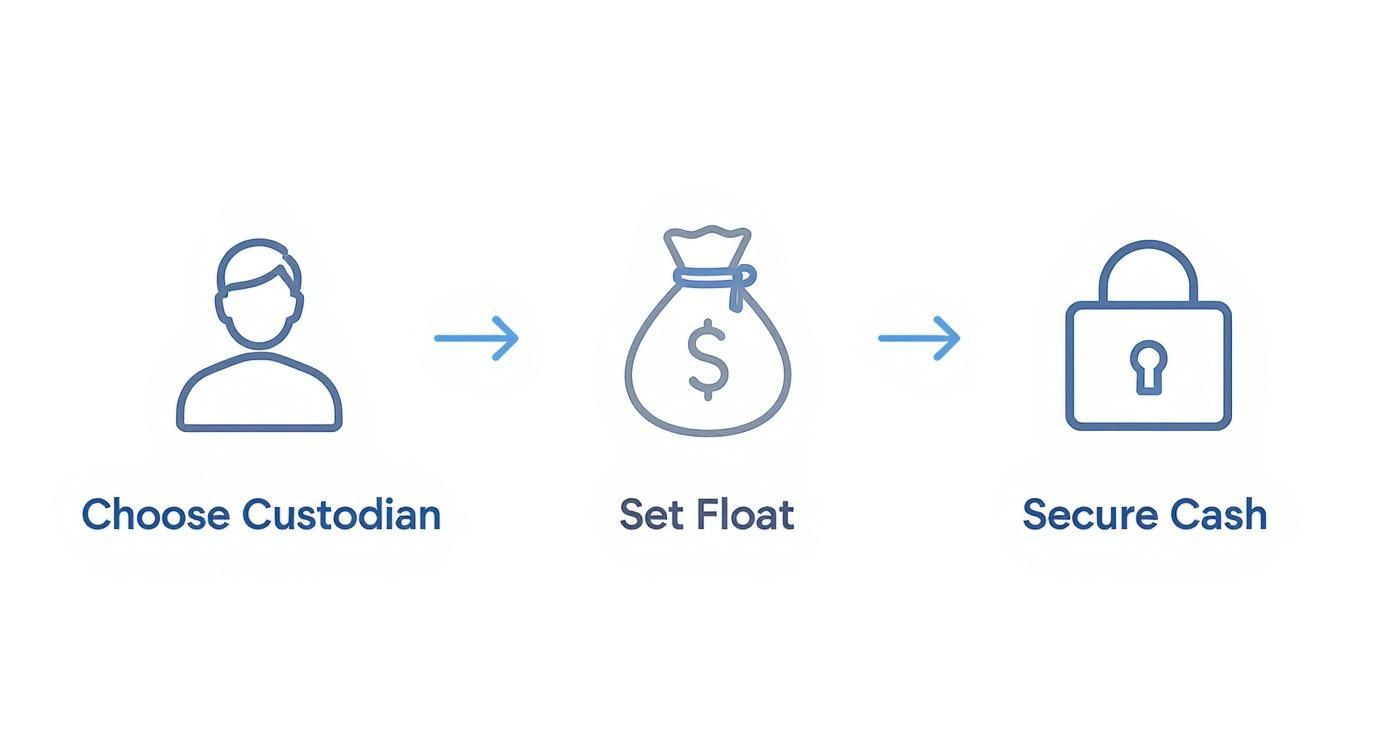
This process creates a solid foundation of control, putting a designated custodian in charge of a fixed float in a secure spot, all ready for accurate tracking.
Reconciliation is the moment of truth. It's the simple act of checking that everything adds up, and it’s something you should do regularly—at least once a month, or whenever the fund needs topping up.
The formula couldn't be simpler:
Remaining Cash in the Box + Total Value of All Receipts = The Original Float
So, if your float is £100 and you have £27.50 left in the tin, you need to have receipts that total exactly £72.50. If the numbers don't match, you’ve got to figure out why before you even think about replenishing the fund. Accurate reconciliation is a core part of sound financial management, and professional bookkeeping services can ensure this gets handled correctly every time.
When you top up the fund, you need to reflect this in your main accounts. This journal entry does more than just record the cash withdrawal; it properly categorises all those little expenses, moving them from the temporary petty cash account into their correct expense accounts in your books.
To keep your financial tracking spot-on, it helps to understand the general ledger in accounting, which is where all your company's transactions are ultimately recorded.
Here’s a quick example. Let's say you spent that £72.50 on office supplies (£40) and travel (£32.50). The journal entry to top up the fund would look something like this:
This entry correctly logs the specific business costs and shows the cash moving from your bank to replenish the petty cash fund, keeping your accounts perfectly balanced.
To turn a simple cash box into a reliable financial tool, you need a formal policy. Think of a petty cash policy as your company’s rulebook—it cuts through confusion, stops misuse before it starts, and makes sure everyone knows their part. It's hands down the best way to build strong internal controls from day one.
Without clear guidelines, a petty cash fund can easily become a source of financial leaks and administrative headaches. A well-defined policy sets firm expectations for what is and isn’t an acceptable use of the fund, protecting both the business and your team.
Your policy doesn't need to be a huge, complicated document, but it absolutely must cover the essentials. These rules create the structure you need to keep the system accountable and transparent. At a minimum, your policy should clearly state:
A well-structured policy is your first line of defence against mismanagement. It establishes a clear audit trail and ensures that every pound spent is accounted for, which is critical for accurate financial reporting and tax compliance.
A policy is only as good as its enforcement. After setting the rules, you need to build in some checks and balances to make sure the system is actually working. Historically, UK businesses have kept floats anywhere from £50 to £500, with meticulous record-keeping always being a cornerstone of good practice recommended by HMRC. If you want to dig deeper into the principles of UK cash management, this National Audit Office report offers some interesting insights.
One of the most effective ways to ensure compliance is to carry out occasional, unannounced spot-checks. The custodian’s manager or someone from the finance team can perform a surprise count to confirm that the cash in the box plus the total of the receipts adds up to the original float. This simple audit reinforces accountability and discourages anyone from getting sloppy with the records.
This works best when paired with regular reporting. Keeping an eye on your management accounts and business performance will help you see how these small, everyday expenses fit into the bigger financial picture.
When you’re running a business, keeping a handle on your petty cash is one thing, but making sure it all squares with UK tax rules is another level entirely. Getting this right is crucial for staying compliant and making sure you’re not paying more tax than you need to.
Two key areas you'll bump into are Value Added Tax (VAT) and general tax deductibility. They might sound a bit daunting, but once you break them down, the principles are actually quite simple.
Here’s the golden rule for VAT and petty cash: you can only reclaim VAT on expenses if you have a valid VAT receipt. Simple as that. If you don't get the right piece of paper, you can't claim back the VAT, which means your business ends up swallowing the full cost.
A proper VAT receipt needs to show certain details for HMRC to even look at it. We’re talking about the supplier’s name, address, and VAT number, plus a clear breakdown of the VAT you were charged.
When your petty cash custodian logs a purchase, they need to split out the VAT from the net cost. Imagine they bought £12.00 worth of office stationery. The log should look like this:
This separation is absolutely vital for clean and accurate bookkeeping. Getting these small details right makes a huge difference when it's time to file your returns. If you need a hand with the bigger picture, understanding how to submit VAT returns properly will ensure you claim back every penny you’re entitled to.
Crucial Tip: A standard credit card slip isn’t a VAT receipt. Always, always ask for a full, itemised receipt that clearly shows the supplier's VAT information. It’s the only way to make your claim stick.
Yes, absolutely. Any legitimate petty cash spending counts as an allowable business expense, which you can deduct from your company's profit. The direct benefit? It lowers your Corporation Tax or Income Tax bill.
For an expense to be considered ‘allowable’, it has to pass HMRC’s "wholly and exclusively" test. This just means the purchase was made purely for your business, with no personal use mixed in. Buying stamps for the office post? Fine. Grabbing a coffee for yourself on the way? Not a business expense.
By keeping meticulous records—vouchers for every withdrawal, receipts for every purchase, and a detailed logbook—you create an undeniable audit trail. This proves every small transaction was for legitimate business purposes, helping you maximise your tax deductions while keeping everything above board with UK regulations.

Let's be honest, the traditional cash box feels a bit dated. While it’s a classic, the admin headaches and security risks of holding physical cash have pushed many businesses to find a better way. Today’s digital tools offer powerful alternatives that give you far more control, security, and insight into your company spending.
These modern systems replace manual tracking with slick, automated expense management. That means less time spent counting coins and more time focusing on what matters, all while cutting down the risk of human error.
One of the most popular modern solutions is using prepaid company cards, usually hooked up to a smart expense management platform. The beauty of these is that you can set specific spending limits for each employee or team, giving you real-time control over who spends what.
When someone makes a purchase, the app prompts them to snap a picture of the receipt right there and then. That photo is instantly logged, categorised, and stored. It’s a simple process with some huge benefits:
Expense management apps also let employees submit claims for out-of-pocket expenses directly from their phones, which makes the whole reimbursement process much smoother. When you integrate these tools with the best cloud accounting software for startups, your financial data flows seamlessly from purchase to profit and loss statement.
While electronic payments now rule the roost, the core idea of having a quick-access fund for small, necessary expenses hasn't gone away. The shift has simply been from a tin of physical cash to controlled, digital funds—keeping the practical purpose of petty cash but in a much more secure and efficient format.
Beyond just general office costs, these modern financial tools can also bring other operational expenses under one roof. For instance, there are now specialised single card solutions for fleet expenses that offer a streamlined way to manage everything from fuel to tolls. This is all part of a long evolution. As electronic payments emerged in the mid-20th century, petty cash started to change, though it remained vital for those immediate, on-the-spot needs.
Even with a solid system in place, questions always crop up during the day-to-day running of a petty cash fund. Getting quick, clear answers helps keep things running smoothly and makes sure everyone on your team is on the same page.
Here are a few of the most common questions we hear from business owners, with straightforward answers for those real-world petty cash headaches.
Ah, the classic problem. Don’t worry, it happens to the best of us. A recent survey found that a staggering 53% of organisations say lost receipts are their single biggest expense management issue. If a receipt is genuinely gone for good, the employee needs to fill out a "missing receipt declaration" form.
This is a simple signed document that should capture all the key details:
This gives you a paper trail for your records, which is crucial. But just remember, without a proper VAT receipt, you cannot reclaim the VAT. It's a small detail that can add up.
Regular reconciliation is the cornerstone of keeping control over your petty cash. You absolutely must reconcile the fund at least once a month, or every time you top it up. No exceptions.
For businesses with lots of small transactions, like a busy cafe or retail shop, you might find a weekly or even daily check-in works better. The most important thing is consistency. Regular checks stop tiny discrepancies from snowballing into a major headache down the line.
Reconciling petty cash is the single most important control you have. It's the moment you confirm that the cash in the box plus the total value of your receipts equals your original float, ensuring every penny is accounted for.
Yes, but only for very minor, incidental expenses. Petty cash is perfect for things like paying for a local bus fare, a short taxi trip across town to a client's office, or covering parking for a quick business errand.
It is absolutely not suitable for larger travel costs. Things like train tickets, hotel stays, or significant fuel expenses should never go through petty cash. These larger items need to be processed through your main expense claims system or paid for with a company card to ensure you have a proper audit trail and maintain control.
