


Getting your taxes right when you're self-employed is less about being a numbers wizard and more about being organised. It all begins with registering for Self Assessment with HMRC, getting your Unique Taxpayer Reference (UTR) number, and circling key dates like the 31st of January on your calendar. Nail this initial setup, and the rest of the year becomes a whole lot simpler.
Taking the leap into self-employment is a brilliant move, but it does come with the new responsibility of handling your own taxes. The system for this is called Self Assessment. It might sound a bit formal and intimidating, but once you break it down into a few key steps, it’s perfectly manageable. Think of this as your starting point for getting everything in order and staying on the right side of HMRC from day one.
The very first thing you need to do is let HMRC know you're now working for yourself. You'll need to register as a sole trader for Self Assessment, and the deadline for this is 5th October in your business's second tax year.
So, if you started trading in July 2024 (which falls into the 2024/25 tax year), you’d need to register by 5th October 2025. It’s a straightforward online process, but don't leave it until the last minute – it’s the domino that gets everything else falling into place.
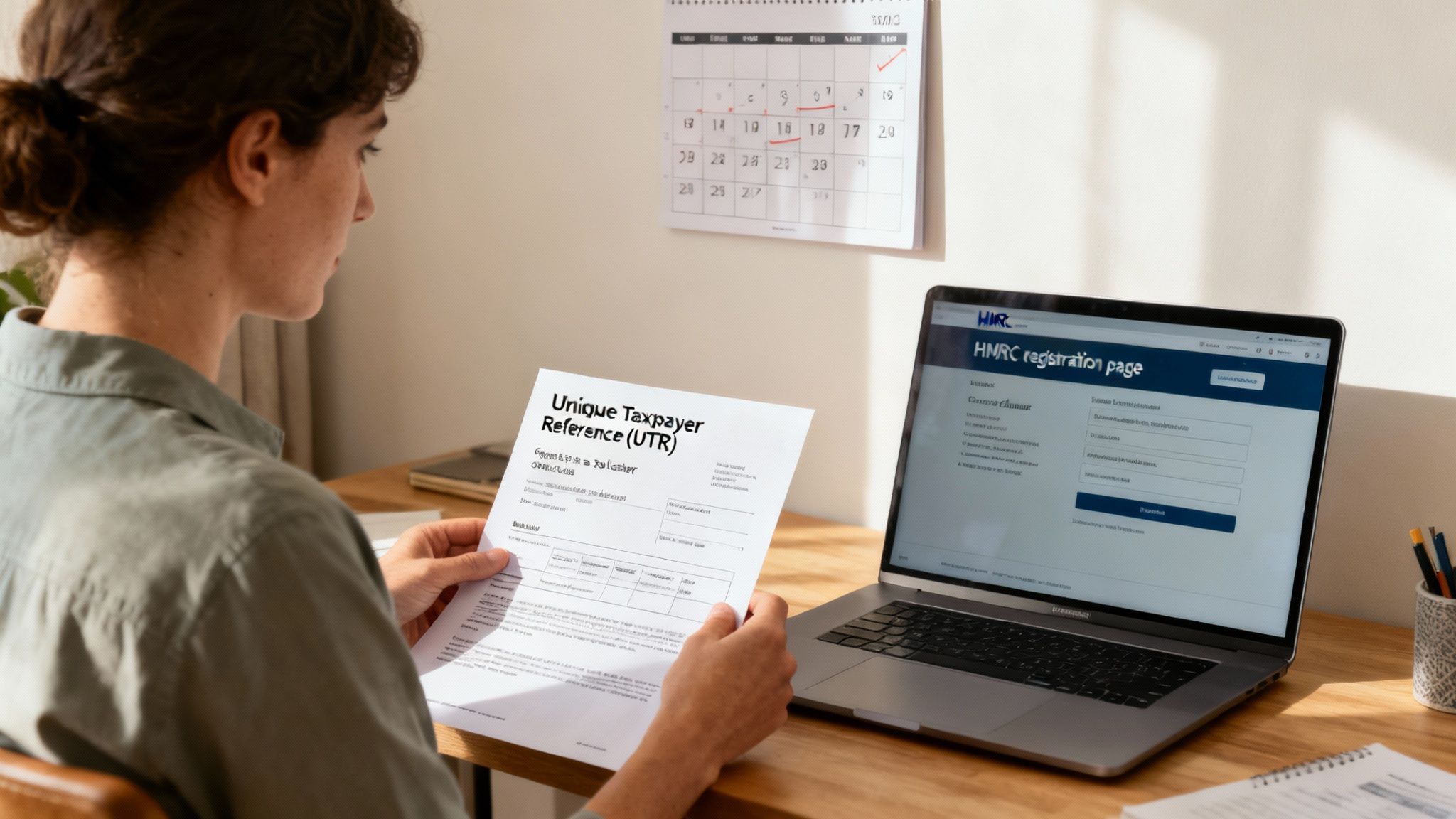
Once you’ve registered, HMRC will post you a Unique Taxpayer Reference (UTR) number. This ten-digit code is your personal ID for absolutely everything tax-related, and you'll need it every time you file. Keep it somewhere safe.
Good news – not every side hustle or bit of freelance work automatically means you have to file a tax return.
HMRC provides a £1,000 trading allowance. If your total income from self-employment (that’s your gross earnings before taking off any expenses) is £1,000 or less in a tax year, you don’t have to tell HMRC or register for Self Assessment.
But as soon as your gross income tips over that £1,000 threshold, you’re legally required to register and get a tax return filed. This is crucial: it applies even if your final profit is tiny after you've deducted your expenses. The trigger is your total revenue, not what’s left over.
You’re certainly not alone in this. During the 2023 to 2024 tax year, around 7.0 million people were registered for Self Assessment, including the UK's roughly 4.4 million self-employed workers. It’s a well-trodden path.
To file your return correctly, you need to get your head around two different timelines: the tax year and your accounting period.
Getting these dates locked in your mind is essential. Below is a quick table of the deadlines you absolutely cannot afford to miss.
Here’s a summary of the critical dates in the UK tax calendar for the self-employed. Sticking to these will help you avoid any nasty penalties from HMRC.
Remembering these dates, especially the big one in January, is the key to a stress-free tax season.
Key Takeaway: The single most important date to burn into your memory is the online filing deadline of 31st January. For the 2024/25 tax year (which ends on 5th April 2025), your online return and your tax payment are both due by 31st January 2026. Miss it, and you're looking at an instant £100 penalty.
And with HMRC pushing everything towards digital, it’s also a smart move to get familiar with what’s coming next. You can learn more about the future of tax with our guide on Making Tax Digital for Self Assessment.
A stress-free tax return doesn't just happen in January. It starts with good habits throughout the year. Getting a handle on your business records isn't about becoming a world-class bookkeeper overnight; it's about finding a simple, consistent system that actually works for you. This simple discipline is the best help you can give yourself, turning what could be a year-end panic into a straightforward task.
When your records are in order, you're not just staying on the right side of HMRC – you’re empowering your business. Accurate numbers give you a crystal-clear picture of your financial health. Crucially, they also make sure you can claim every single allowable business expense you're entitled to.
The best system is the one you’ll actually use. You don't need a complicated setup, just something you can stick with.
For many who are just starting out, a dedicated spreadsheet is perfectly fine. Create separate tabs for your income and different types of expenses. Every time you make a sale or buy something for the business, log it immediately. Pop in the date, a quick description, and the amount. This simple habit will save you from a frantic search through old bank statements and crumpled receipts later on.
As your business grows, you'll probably find that proper accounting software is a game-changer. Platforms like Xero, QuickBooks, and FreeAgent can connect directly to your business bank account, automatically sorting your transactions for you. Yes, there's a subscription cost, but the time you save and the accuracy you gain can be well worth it. For an even smoother process, it's worth exploring tools for streamlining your small business finances.
To figure out what's right for you at this stage, have a look at our guide on the best cloud accounting software for startups.
This is where your good record-keeping really pays off – literally. An "allowable business expense" is any cost you incur "wholly and exclusively" for your trade. When you deduct these costs from your income, you lower your total profit, which in turn lowers your final tax bill.
Let's look beyond a generic list and dig into some real-world examples that often get missed.
Crucial Distinction: It's vital to get your head around the difference between revenue expenses (your everyday running costs, which are deducted from profit) and capital expenses (buying assets with lasting value, like a new laptop or van). Capital expenses are treated differently, usually claimed through Capital Allowances over several years.
This is one of the trickiest areas for the self-employed: handling costs that have both a business and a personal element. The rule is simple: you can only claim the business portion. But you need a fair and reasonable way to calculate it.
A classic example is your mobile phone. If you use your personal phone for business, you can't just claim the entire monthly bill. You'll need to go through your statement, work out what percentage of your calls and data were for business, and claim that proportion of the cost.
To make life easier, HMRC offers a shortcut called "simplified expenses" for two key areas: working from home and using a vehicle for business.
Instead of meticulously calculating a portion of your actual household bills (like heating, electricity, and council tax), you can use a flat monthly rate based on the hours you work from home.
It’s a similar story for your vehicle. You can claim a flat rate per business mile you drive, instead of tracking all your actual running costs like fuel, insurance, and repairs. For cars and vans, the rate is 45p per mile for the first 10,000 miles and 25p for any miles after that. Just remember to keep a detailed log of all your business journeys.
Choosing simplified expenses means less number-crunching, but it’s always worth doing a quick calculation to see if claiming the actual costs would save you more tax. The key, as always, is to be consistent and keep the records to back up every claim you make.
Logging into the HMRC portal and facing the Self Assessment form can feel like you’re about to climb a mountain. Honestly, it’s far more manageable than it looks. The best way to think of it is a smart questionnaire that adapts as you go, hiding all the sections you don’t need. It's just a case of tackling it one page at a time with your figures at the ready.
This process chart gives a simple overview of what you need to have prepared.
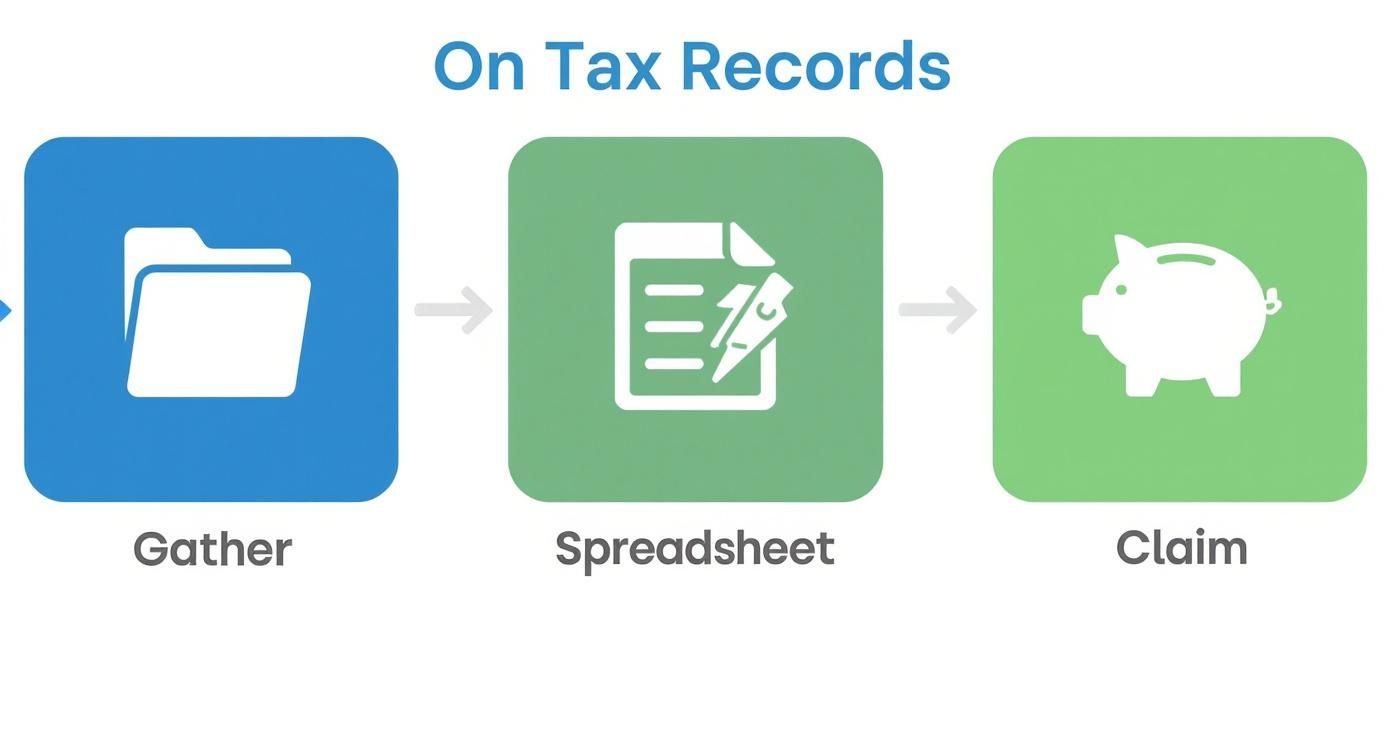
As the visual shows, a successful tax return always starts with gathering your financial documents, getting them organised, and then using that info to claim everything you're entitled to.
The very first part of the online form is called 'Tailor your return'. This is probably the most important part for avoiding any confusion later on. It’s a series of yes/no questions that cleverly work out which sections of the tax return you actually need to fill in.
As a self-employed person, the crucial box to tick 'yes' for is the one asking if you were self-employed as a sole trader. Getting this right brings up the specific pages for your business income and expenses. If you’ve got other income streams, maybe from a rental property or a part-time job, you'll select those here as well.
Nail this section, and you won't even see the irrelevant bits about capital gains or foreign income, which makes the whole thing feel much less intimidating.
After you've tailored the return, you’ll land in the self-employment section. The first major figure you'll need is your turnover – which is just the total amount of money your business earned before you deduct any expenses.
It’s the grand total of all your sales invoices for the tax year. Don't mix this up with profit. For instance, if you're a freelance graphic designer who invoiced clients for £35,000 in total, that’s your turnover figure. Simple as that.
You'll also be asked for a business description. Be clear but concise. Instead of just putting "consultant," try something more specific like "IT support consultant" or "marketing consultant."
Here’s where all that diligent record-keeping really pays off. The form has different boxes for various categories of expenses. You won’t need to upload every single receipt, but you will need the total amount for each category.
Common expense categories you'll see on the form include:
Just add up the totals from your spreadsheet or accounting software and pop them into the right boxes. If you’re using simplified expenses for your vehicle or home office, there are specific places to enter those figures instead of the actual costs.
Top Tip: Always double-check your figures before you enter them. A simple typo, like putting £5,000 instead of £500 for travel, can massively throw off your profit and tax calculation. The online form does some basic checks, but it can’t spot every human error.
The system will then automatically subtract your total expenses from your turnover to calculate your trading profit for the tax year. For anyone using specific software to make submission easier, looking into solutions like Drake Tax Hosting for Tax Preparation can add an extra layer of support and accuracy.
Submitting your return is the final button-click, but the journey doesn't have to end there. If the process feels a bit much or you just want the peace of mind that a professional has checked it over, exploring dedicated self-employed tax returns services can provide the expert backup you need. It ensures everything is spot on and you’ve claimed every penny you're entitled to.
Hitting 'submit' on your tax return is a great feeling, but the journey isn't quite over. The next piece of the puzzle is figuring out how HMRC turns your profit figure into an actual tax bill. It’s not magic; it’s a calculation based on a few core parts. Getting your head around them gives you total clarity on what you owe and why.
The final number you see isn't just one lump sum. It's actually made up of two different taxes: Income Tax and National Insurance. Let’s break down how each one works.
Everyone in the UK, whether you're employed or self-employed, gets a Personal Allowance. For the 2024/25 tax year, this is £12,570. Think of this as the amount of profit you can earn completely tax-free. HMRC only starts charging tax on your earnings above this amount.
Once your profit goes past the Personal Allowance, it’s taxed in bands. These are like buckets – as you fill one up, your earnings spill over into the next, which has a higher tax rate.
Here are the bands for 2024/25:
Let's take a real-world example. Say you're a freelance consultant with a trading profit of £40,000. You'd pay zero tax on the first £12,570. The rest of your profit – £27,430 (£40,000 - £12,570) – falls squarely into the basic rate band. Your Income Tax bill for the year would be £5,486.
As a self-employed person, you’ll also pay National Insurance Contributions (NICs) on your profits. This money funds state benefits like the State Pension. There are two types you need to know about.
Class 2 NICs
This used to be a flat weekly rate, but from 6 April 2024, things have changed. If your profits are over £12,570, you're now treated as having made the contributions without actually needing to pay anything. This is great news as it protects your National Insurance record for the future.
If your profits are below £6,725, you can choose to make voluntary Class 2 contributions to build up your entitlement to state benefits.
Class 4 NICs
This one is based on how much profit you make. For the 2024/25 tax year, you’ll pay:
Going back to our consultant with £40,000 profit, their Class 4 NICs would be 6% of £27,430. That works out to £1,645.80.
This is the one that often catches newly self-employed people out, and it can really impact your cash flow if you're not ready for it. If your total Self Assessment tax bill is over £1,000, HMRC will ask you to make advance payments towards your next year's tax bill. These are known as Payments on Account.
HMRC's logic here is to stop you from facing one enormous tax bill each year. Instead, they split your estimated future tax into two instalments to help spread the cost. It’s a system designed to help, but you absolutely have to be prepared for it.
Each payment is exactly 50% of your previous year's tax bill. The deadlines are non-negotiable:
Let's imagine your total tax and NI bill for the 2024/25 tax year comes to £3,000. On 31st January 2026, you'd owe:
That means your total payment due on that first January deadline is a whopping £4,500. You’d then pay the second £1,500 instalment on 31st July 2026. Understanding this is absolutely essential for budgeting and is some of the most critical self-employed tax return help you can get.
Once you’ve got the final figure, paying HMRC is straightforward. The most common ways to pay are:
Pick whichever method suits you best, but make sure the payment clears by the 31st January deadline. Missing it will lead to late payment penalties and interest charges, which is money you definitely don't want to be giving away.
Navigating your first few tax returns can feel like walking through a minefield. The good news is that most mistakes are entirely avoidable once you know what to look for. By learning from the common errors others make, you can file with confidence and keep your business finances clean and stress-free.
Providing accurate self-employed tax return help means highlighting these frequent slip-ups so you can sidestep them completely. A simple oversight can easily lead to paying too much tax or, worse, facing an uncomfortable enquiry from HMRC.
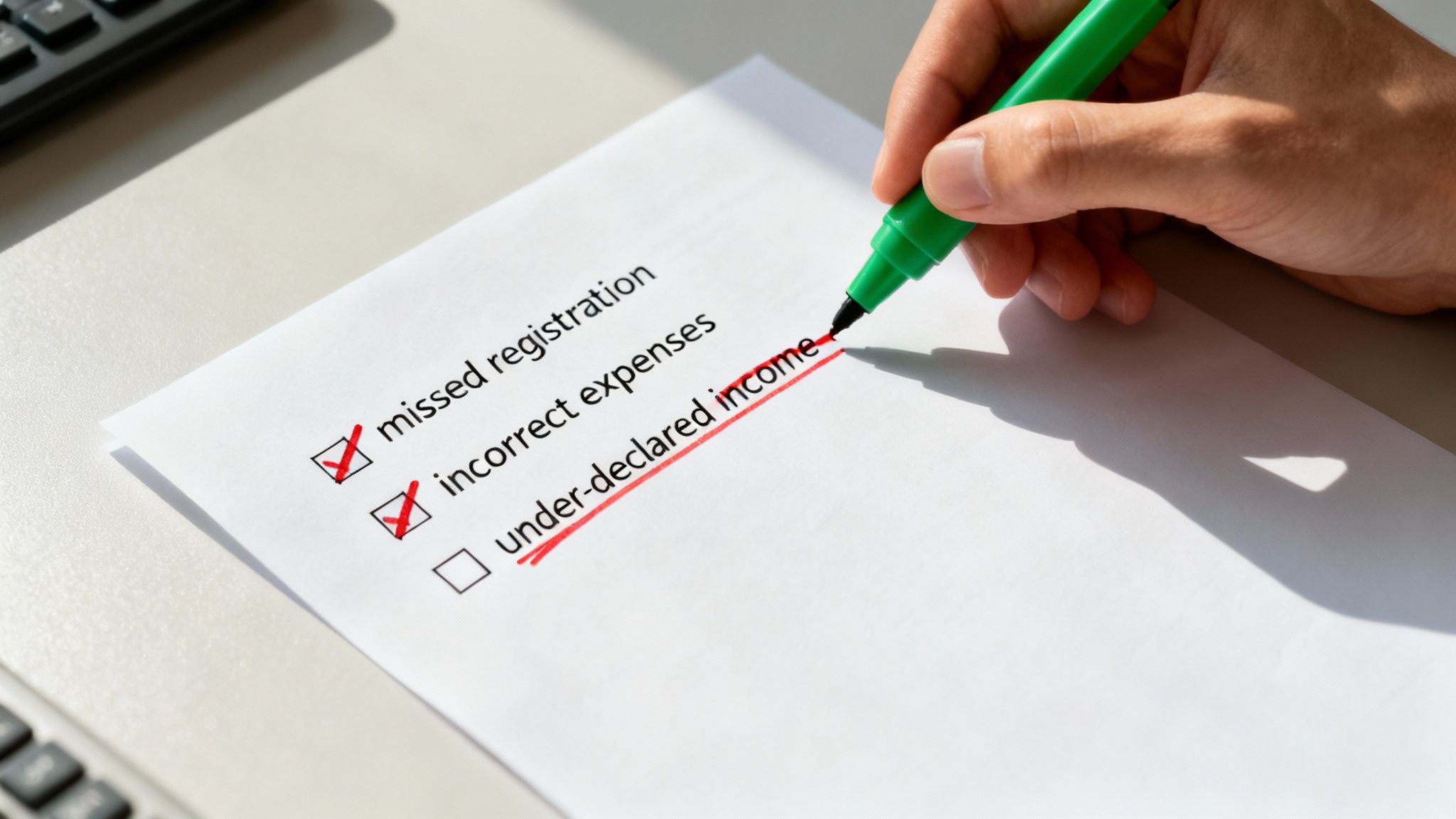
This is, without a doubt, the number one cause of tax return headaches. When your records are messy or incomplete, you're essentially guessing your figures. This can lead to two major problems: under-declaring income (which attracts penalties) or failing to claim all your allowable expenses (which means you pay more tax than you need to).
A disorganised system also makes an HMRC enquiry far more stressful than it needs to be. If they ask for evidence to back up your claims, you need to be able to produce it quickly and easily.
Maintaining organised accounts isn't just about compliance; it's a fundamental business practice. Tidy records give you a clear view of your financial health and make tax time a simple administrative task rather than a source of dread.
For a deeper dive into organising your finances, you can explore professional bookkeeping services for small businesses that can set you on the right path from day one.
A classic error is trying to claim for expenses that aren't "wholly and exclusively" for business purposes. While claiming your weekly food shop is an obvious no-go, the lines can blur with mixed-use costs like your mobile phone or home internet.
To avoid this, you must have a reasonable, consistent method for calculating the business portion of any shared expense. Simply claiming the whole bill is a fast track to an inaccurate return and a potential red flag for HMRC. A separate business bank account makes spotting purely business transactions much easier.
It can be tempting to ‘forget’ a few small cash-in-hand jobs, but every penny of your business income must be declared. HMRC has sophisticated systems to detect discrepancies by comparing data from various sources. Intentionally hiding income is tax evasion, which carries severe penalties.
More often than not, this mistake happens unintentionally through poor record-keeping. If you don't log every payment as it comes in, it's all too easy for some to slip through the cracks by the time you file months later.
Filing your tax return on paper might seem like the simpler, old-school option, but it's riddled with disadvantages and risks you need to be aware of. The system is heavily geared towards online submissions for a reason.
Here’s a quick rundown of why you should think twice before reaching for a pen and paper.
The table makes it pretty clear: filing online is faster, safer, and comes with a much later deadline.
Here’s what those differences mean in the real world:
Despite the obvious drawbacks, a surprising number of people still file on paper. In the 2024 to 2025 tax year, around 304,000 people submitted paper Self Assessment returns, risking fines for missing the much earlier deadline. You can read more about this trend on consultancy.uk and why it highlights the importance of moving to digital.
When you're wading into the world of Self Assessment for the first time, a few common questions always pop up. Let's get them answered so you can file with a bit more confidence.
Let’s be blunt: missing the 31st January online filing deadline is a costly mistake. HMRC hits you with an immediate £100 penalty, and that's just for starters – it applies even if you have no tax to pay.
The penalties don't stop there. After three months, you’ll face daily fines of £10, racking up to a maximum of £900. If you're still holding out at the six and twelve-month marks, they'll add further penalties of 5% of the tax you owe or £300 (whichever is higher). It's a snowball effect you really want to avoid, so make that deadline a priority.
This is a common point of confusion, but the answer is a firm no – you have to pick one. You can't have both.
If your gross income from self-employment is over £1,000, you have two options:
So, which should you choose? If your total business expenses for the year add up to more than £1,000, it makes financial sense to claim for the actual costs. But if your expenses are pretty minimal (well under £1,000), grabbing the trading allowance is simpler and leaves you better off.
Pro Tip: Before you decide, quickly tally up your expenses. The right choice is purely down to the numbers for that specific tax year. A few minutes of calculation can make a real difference.
Legally speaking, no. There's no rule that says you must hire an accountant. Plenty of sole traders with straightforward finances manage their own tax returns perfectly well using HMRC’s online service.
However, a good accountant is worth their weight in gold if your business affairs are a bit more complex, you're not 100% sure what you can claim, or you just want the peace of mind that everything is optimised. Think of it this way: their fee is an allowable business expense, and they can often save you far more in tax than they charge.
You need to tell HMRC you're self-employed by 5th October in your business's second tax year.
Let’s break that down with an example. Say you started your business in June 2024. That falls into the 2024/25 tax year. This means your deadline to register for Self Assessment is 5th October 2025. Don't leave it to the last minute; get registered as soon as you know you need to file a return and tick it off your list.
Feeling like it's all a bit much? The experts at GenTax Accountants can take the weight off your shoulders. We offer clear, fixed-price accounting services to make sure your tax return is accurate, optimised, and filed on time, every time. Get in touch with us today at https://www.gentax.uk.
