



Let’s be honest, nobody starts a business because they love processing supplier invoices. Yet for so many businesses, the accounts payable (AP) team is drowning in paperwork, manually tapping invoice details into a spreadsheet or accounting software. Every single invoice is a potential bottleneck, an opportunity for human error, and a source of frustration.
This is exactly the problem Lightyear was built to solve. It effectively replaces that messy, outdated process with a slick, digital sorting office for all your bills.
Think of Lightyear as a dedicated digital mailroom for your accounts payable department. Instead of someone physically opening envelopes, printing PDFs, and keying in data line-by-line, Lightyear captures, reads, and processes every supplier invoice with minimal human touch. Your team is freed up to focus on work that actually adds value, while the software handles the grunt work.
It's not just about speed, either. It’s about gaining complete control and a clear view of your company's spending as it happens, not weeks later.
By automating the most repetitive parts of the AP process, businesses can slash invoice processing times by up to 80%. This isn't just a time-saver; it improves financial accuracy and frees up your best people for more important tasks.
So, how does it actually work? Lightyear pulls this off through a few core functions that work together seamlessly:
Throughout this guide, we'll dig into how these features solve real-world headaches for UK businesses just like yours.
To really get your head around how Lightyear works, let’s follow an invoice from the moment it lands in your business. This isn't just about going paperless; it’s about swapping a manual, time-sucking chore for a slick, automated process. Forget that overflowing physical inbox.
First things first, Lightyear needs to get hold of the invoice. Your suppliers can email a PDF straight to a dedicated address, you can upload files yourself, or even just snap a picture of a receipt on the go with their mobile app. This flexibility is key—it means every single bill, no matter how it arrives, ends up in one organised system.
This move from a mountain of paper to a clean digital workflow is a huge shift for any business.
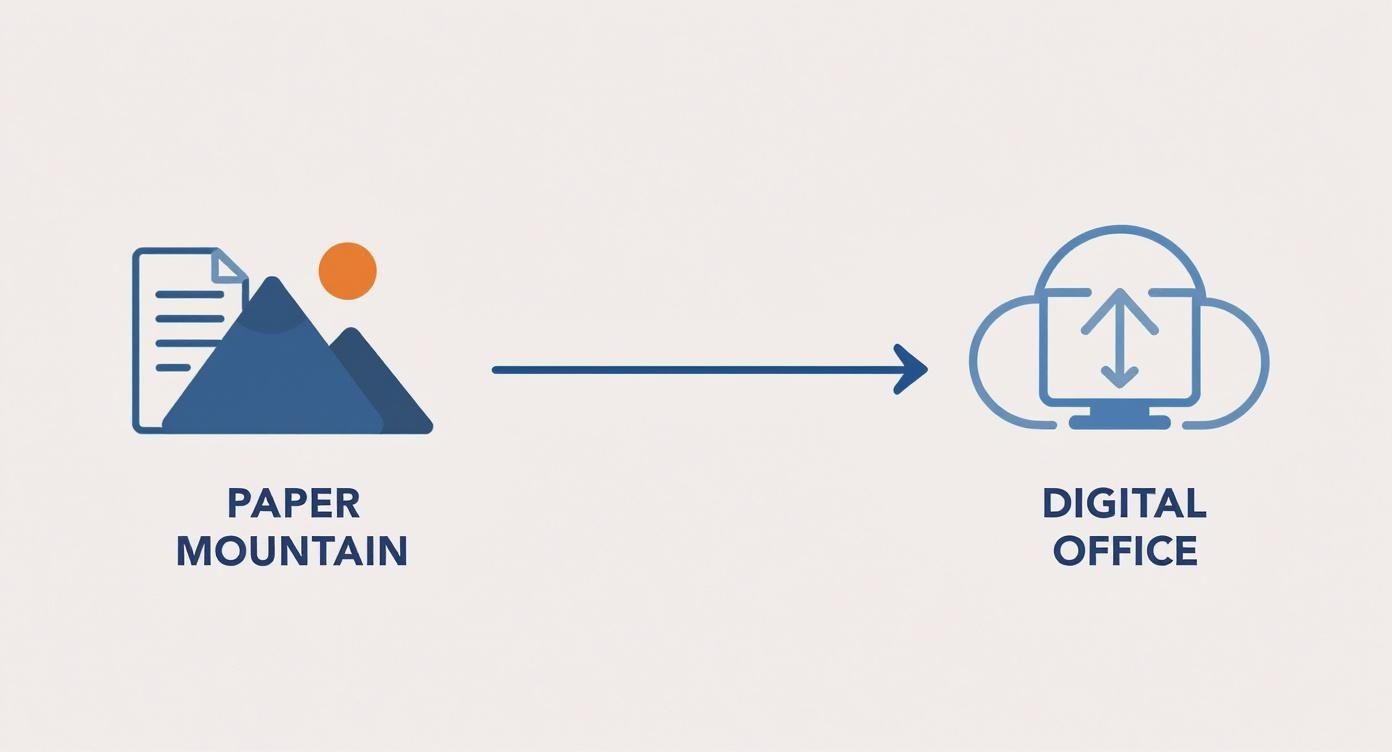
It’s a simple idea, but seeing it visually really drives home how much clutter—both physical and mental—is removed when everything is centralised in the cloud for instant access.
Once the invoice is in the system, Lightyear’s clever data extraction tech kicks in. It automatically reads and pulls out every last bit of crucial information:
What does this mean for you? Manual data entry is officially a thing of the past. The software populates all the fields with near-perfect accuracy, which is the bedrock of a solid financial process. It’s this kind of clean, timely data that our own expert bookkeeping services build upon to give you a clear picture of your finances.
Next up is approvals. You can set up custom rules to automatically ping invoices to the right person based on things like department, project code, or the total amount. For instance, a project manager might need to sign off on any expense over £500 for their job, while routine office supply bills get approved automatically. To really appreciate what's possible here, it's worth checking out a guide on automating your invoice processing.
A manager gets a notification, reviews the invoice on their phone or computer, and approves it with a single click. That simple action triggers the final step: the invoice is exported straight into your accounting software, ready to be paid.
Knowing the workflow is one thing, but seeing how Lightyear’s tools solve real-world problems is where the value really clicks. These aren’t just abstract bells and whistles; they’re practical solutions designed to tackle the financial headaches that UK businesses—from sole traders to limited companies—face every day. Each feature works together to build a faster, more accurate, and completely transparent accounts payable process.
The platform does far more than just grab the total from an invoice. It’s a whole suite of intelligent tools that give you a level of control over your spending that was previously impossible.
One of the most powerful tools in the box is automated line-item data extraction. Forget just seeing a total of £500 from a supplier. Lightyear meticulously reads every single line on the invoice, letting you track the exact quantity and cost of individual products or services.
For any business juggling complex projects or managing stock, this is a game-changer. It gives you the granular data needed to accurately calculate job profitability or manage inventory costs down to the last penny. This detail is especially vital for growing businesses, like those in online retail. To get a better handle on managing finances in this space, check out our insights on accounting for eCommerce businesses.
This screenshot shows you just how clean and organised the interface is. Invoices are processed and the details are populated automatically, ready for your review.
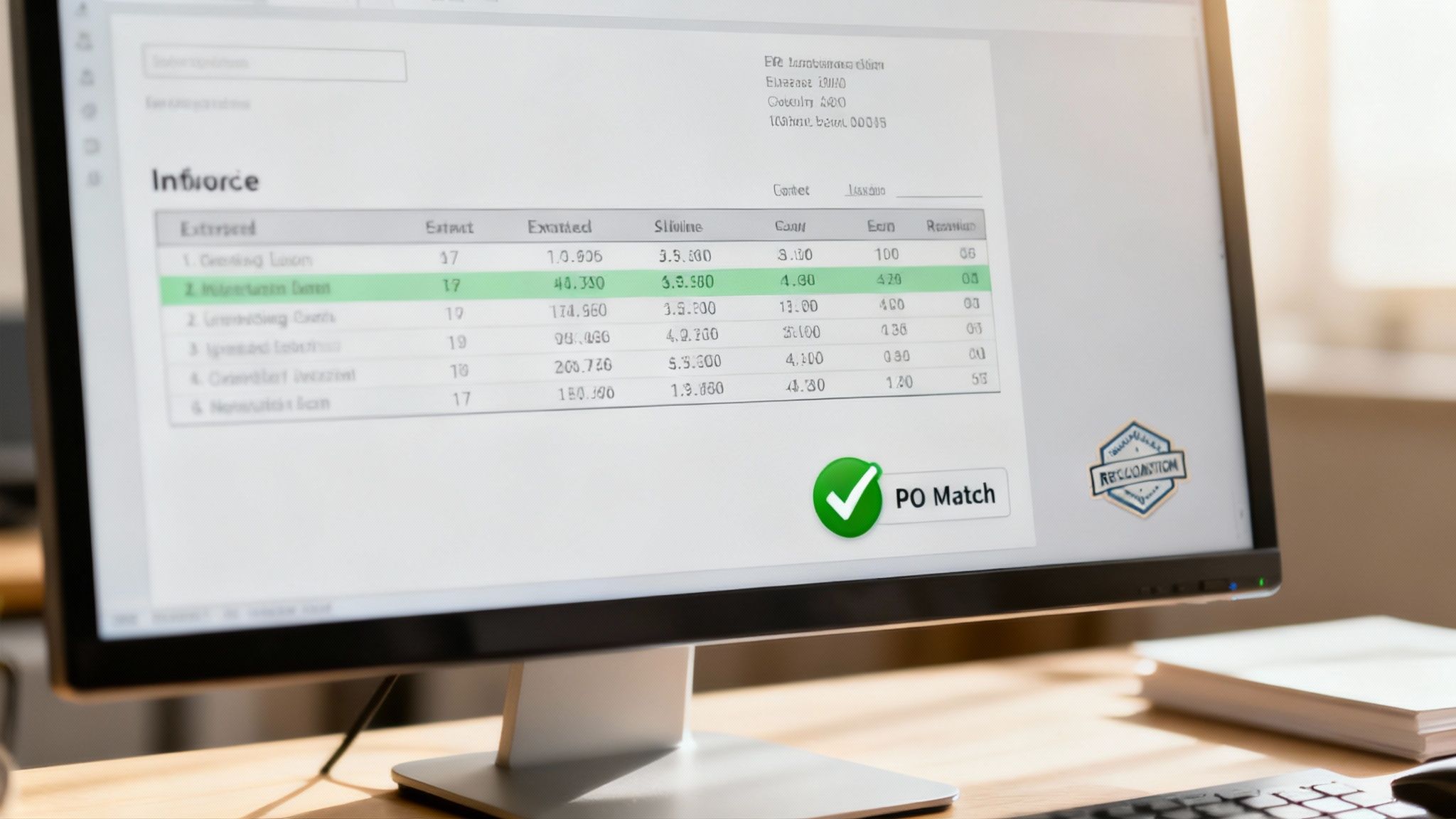
The dashboard turns what was once a cluttered email inbox into a clear, actionable financial overview, displaying captured invoices, their status, and all the extracted data.
Beyond just pulling data, Lightyear provides a robust set of features to stop common financial mishaps in their tracks, like accidental overpayments or paying for goods you never actually received.
By automating these checks and balances, Lightyear doesn't just speed up your AP process; it makes it significantly more secure and reliable. It builds a robust, error-resistant foundation for your company's financial operations.
Here's a quick look at how Lightyear's features stack up against the old, manual way of doing things. The difference is stark, highlighting the huge efficiency gains and financial controls you get by automating your accounts payable.
As you can see, the shift from manual processes to Lightyear's automation isn't just about saving a bit of time—it's about fundamentally improving the accuracy, security, and visibility of your entire accounts payable function.
Think of your accounting software as the central brain for your company’s finances. Lightyear doesn't try to replace it. Instead, it acts as a highly specialised front-end department, perfecting one crucial job—accounts payable—before feeding flawless data directly into that brain.
This connection is what makes the entire system so powerful. It creates a smooth, two-way street for financial information, eliminating the bottlenecks and manual work that slow so many businesses down.
Once an invoice has been captured, coded, and passed through your custom approval workflow in Lightyear, the final click sends it straight to your accounting ledger. It automatically creates a new bill in Xero or QuickBooks, complete with all the correct coding, VAT information, and even attaches a PDF of the original invoice.
Just like that, you’ve completely removed the need for manual data entry, which is where costly mistakes so often happen.
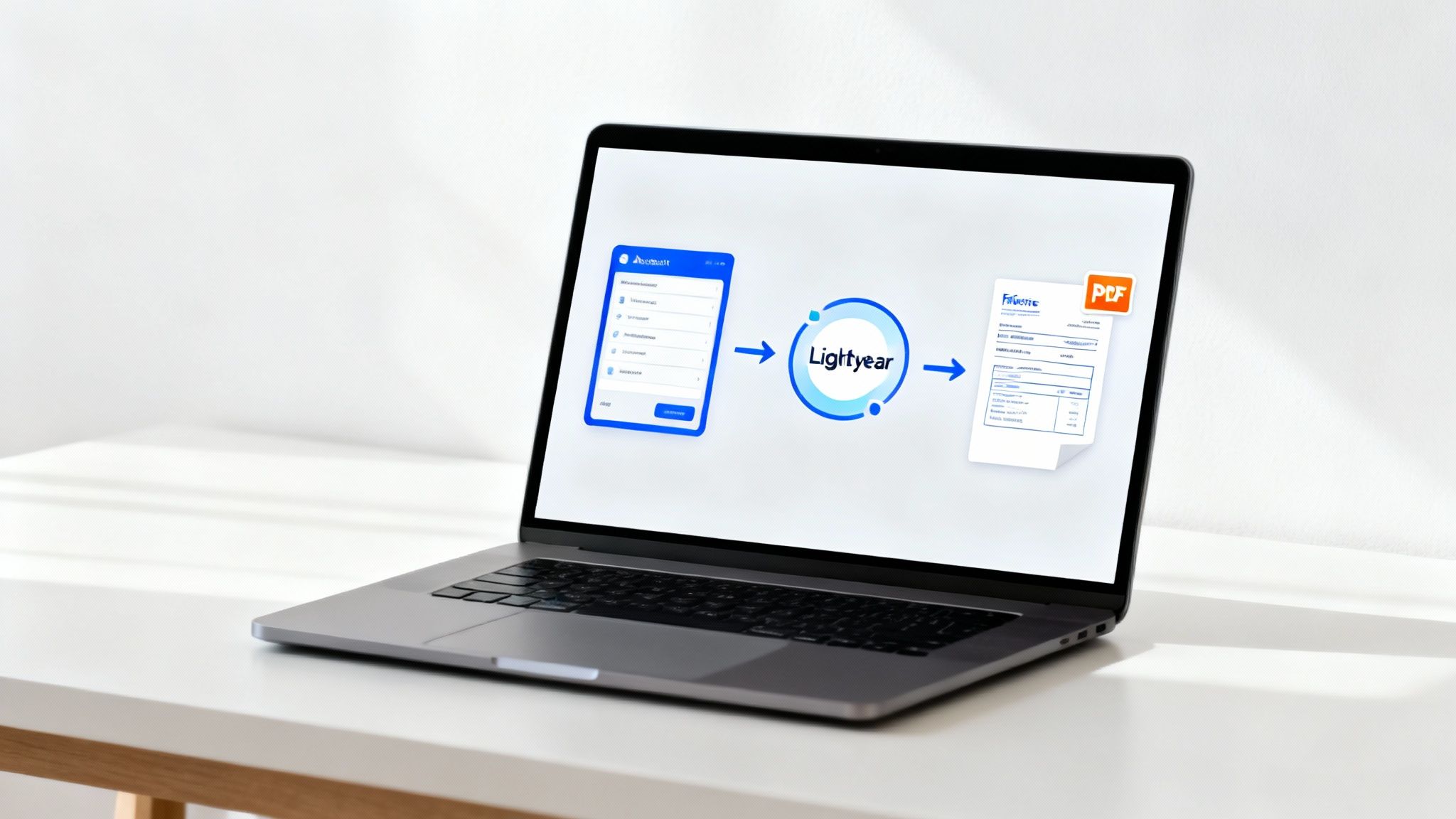
This seamless flow of information ensures your financial records are always accurate and up-to-date, reflecting the true state of your liabilities in real-time. No more guesswork.
The integration isn’t just a one-way push, either. To ensure total consistency, Lightyear pulls critical data directly from your accounting system. This live synchronisation includes:
This two-way sync is fundamental. It means your team isn't working with outdated lists or guessing at codes. Both systems speak the same language, creating a robust and reliable ecosystem where each platform does what it excels at. For startups weighing their options, choosing the right foundational system is key. You can explore our guide on the best cloud accounting software for startups to understand why a strong core ledger is so important.
By creating this closed loop, you establish a single source of truth for your accounts payable data. What you see in Lightyear is precisely what gets recorded in your financial ledger, guaranteeing consistency and accuracy across your entire financial operation.
To really get your head around Lightyear's value, let's walk through a real-world example. Imagine a modern, tech-focused firm like GenTax brings a new construction client on board. The client is a master of their trade but is completely swamped by a chaotic mess of project invoices, crumpled receipts, and supplier statements.
The firm’s first move isn't to ask for a shoebox full of paper. Instead, they get the client set up on Lightyear straight away. The process is dead simple: they create a dedicated email address where the client and their project managers can just forward any invoice that comes in. That's it. No more printing, no more manual sorting.
Next up, the accountants at GenTax configure a few custom approval rules. For instance, any invoice over £1,000 for "Project A" gets automatically sent to the lead project manager's phone for approval. Any materials invoices for "Project B" are routed to a different manager. This one simple step gets rid of the endless email chains that used to bring payments to a grinding halt.
The benefits for both sides become obvious almost immediately. The construction client gets a crystal-clear, real-time view of their spending on every project. Project managers can approve invoices with a single tap on the mobile app, whether they’re out on-site or back in the office. This newfound control gives them a much tighter grip on their budgets and financial planning. For businesses managing lots of physical assets alongside their finances, a detailed guide to performing an asset audit can be an incredibly useful resource.
For the accounting firm, the impact is just as big. With manual data entry completely off the table, the team can pivot from mind-numbing admin to providing high-value advisory services.
This frees them up to spend their time analysing the client’s spending patterns and offering proper strategic advice. This is what modern financial management is all about, and it’s a cornerstone of our year-end accounts services. By using a tool like Lightyear, the firm turns a low-margin, time-sucking task into a slick, value-driven process that actually makes the client relationship stronger.
Bringing new software into the business can feel like a mammoth task, but getting Lightyear up and running is actually a smooth, structured process. The real trick is to see it less as a technical chore and more as a strategic upgrade for your entire financial workflow.
It all starts with a simple exercise: mapping out how you currently handle accounts payable. Who approves what? Where are the hold-ups? Getting this down on paper (or a whiteboard) is the first, most crucial step.
This initial blueprint is your foundation. It lets you set up Lightyear’s approval rules to perfectly mirror—and more often than not, massively improve—your real-world processes right from day one. You're not just swapping paper for pixels; you're building a smarter, faster system from the ground up.
Once your process is mapped out, the practical steps are refreshingly straightforward. A bit of method at the start ensures you get a real return on your investment, fast.
The goal is a seamless transition, not a disruptive overhaul. By focusing on a clear, step-by-step rollout, you ensure your team feels empowered by the new tools, not overwhelmed by them.
For businesses that want to nail this process from the get-go, getting an expert in can make all the difference. Professional guidance on technology transformation makes sure your new software stack is perfectly aligned with your business goals, delivering a serious return on investment from the outset.
And the costs? Lightyear’s pricing is transparent and subscription-based, designed to scale with your business as your invoice volume grows. It's a predictable and manageable operational expense, not a scary capital investment.
To wrap things up, let's tackle a few common questions that crop up when businesses are thinking about bringing Lightyear into their workflow.
Not at all. While it's a massive hit with accounting firms, Lightyear is really built for any business that feels like it’s drowning in supplier invoices. We see huge wins in sectors like construction, hospitality, and retail, where juggling countless supplier bills is a daily headache. The whole point is to bring operational efficiency to your invoice capture, coding, and approval process, no matter what industry you're in.
This is where it really shines for businesses with an international footprint. Lightyear is built for global trade. The platform is clever enough to automatically spot and process invoices in multiple currencies. It uses synced exchange rates to keep everything accurate, which is a lifesaver for any UK business buying from overseas suppliers. It completely removes the manual currency conversions and the human error that often comes with them.
Security is a top priority for the platform. Lightyear uses secure cloud infrastructure to store your data, creating a permanent, searchable, and compliant digital archive of all your AP documents. This is far more secure than storing paper files locally.
Absolutely. By shifting your accounts payable process into a secure cloud environment like Lightyear, you’re creating a digital record that’s both robust and reliable. Honestly, it’s often a lot more secure and certainly more accessible than keeping stacks of paper files in an office or having random PDFs scattered across a local server.
Ready to stop seeing accounts payable as a costly bottleneck and turn it into an efficient, automated part of your business? Get in touch with GenTax Accountants today. We can show you exactly how we integrate tools like Lightyear to build a smarter financial workflow. Visit us at https://www.gentax.uk to learn more.
