


So, you need to register for Self Assessment. Getting this sorted is your first official step into the world of UK tax returns, especially if you’ve just gone self-employed or started earning income that isn't taxed automatically.
The process is all done online through the GOV.UK website. You’ll set up a Government Gateway account, follow the right registration path for your situation, and in return, HMRC will issue your Unique Taxpayer Reference (UTR). Think of it as your personal ID for the tax system.
Navigating UK tax can feel like a minefield, but understanding why you need to register for Self Assessment is the best place to start. It’s not just a box-ticking exercise for sole traders; it’s a legal requirement for anyone earning income that hasn't been taxed at source through a PAYE salary.
Getting this right from day one saves a world of headaches and potential penalties down the line.
At its heart, Self Assessment is simply the system HMRC uses to collect Income Tax from people and businesses with untaxed earnings. If that's you, the responsibility is on your shoulders to declare that income by filing a tax return each year.
The net is wider than you might think. While starting out as a sole trader is the classic trigger, plenty of other scenarios mean you need to get on HMRC’s radar.
You’ll have to register if you:
Let's quickly break down the most common situations.
This table gives a quick summary of the most common reasons you'd need to file a tax return and when to act.
Remember, these are just the most frequent cases. If you're ever unsure, it's always better to check with an accountant or HMRC directly.
Missing the registration deadline is an easy trap to fall into. If you’re new to self-employment, you must tell HMRC by 5 October following the end of the tax year you started trading. For example, if you started your freelance career in June 2024 (which is in the 2024-25 tax year), your deadline to register is 5 October 2025.
Your Unique Taxpayer Reference (UTR) is your key. This 10-digit number is assigned to you once you register and identifies you within the HMRC system. You will need it for all future correspondence, filing your return, and communicating with an accountant.
Putting off your registration is a bad idea. It can lead to an immediate £100 fine if you miss the deadline. More importantly, you can't file your tax return without a UTR, so a delay here creates a domino effect, risking further penalties for late filing and late payment.
Ultimately, registering is the foundational step in staying compliant. It unlocks your access to the online filing system and ensures you get the right communications from HMRC.
As tax continues its shift towards digital, being on top of your obligations is more important than ever. For a deeper dive, check out our guide on Making Tax Digital for Self Assessment, which explains what's coming next. Getting registered promptly sets you on the right path, giving you peace of mind and control over your finances.
Not everyone follows the same road when it comes to registering for Self Assessment. HMRC has laid out a few different routes, and the one you take depends entirely on your situation. Getting this right from the very beginning is the key to avoiding delays and a whole lot of admin headaches down the line.
Think of this section as your roadmap. We’ll walk through the various channels available on the GOV.UK portal. It's a bit like choosing the right lane on a motorway – pick the correct one and you’ll get to your destination smoothly. The wrong one could see you stuck in a frustrating detour.
This decision tree gives you a quick visual guide to see if you need to register based on where your income is coming from.
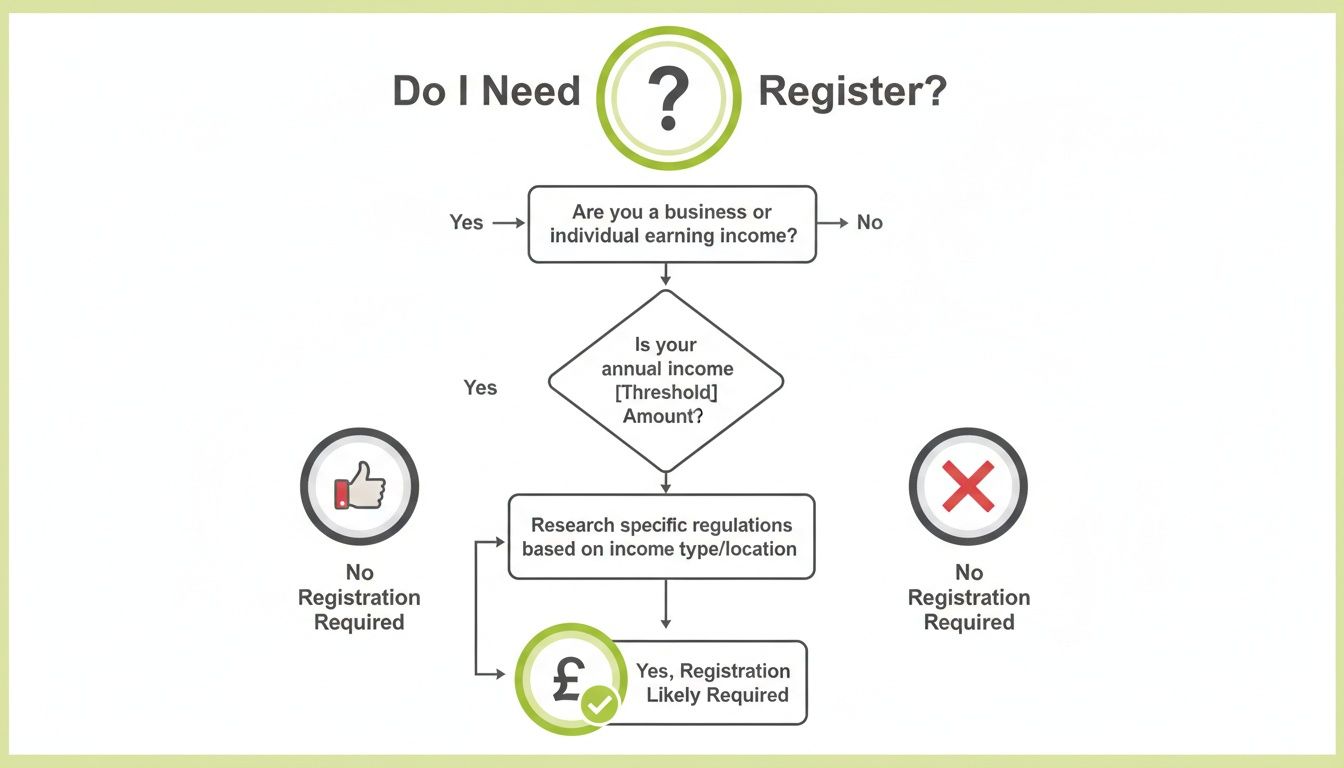
The main takeaway here? Earning over £1,000 from either self-employment or property is one of the biggest triggers for needing to register.
This is by far the most common path people take. If you've started working for yourself – whether as a freelancer, a contractor, or by setting up a small business – HMRC sees you as a sole trader. You’ll need to register this way even if you’re also holding down a separate PAYE job.
This registration process is specifically for people who have never filed a tax return before. You'll give them your basic personal and business details, and in return, HMRC will get you set up for Self Assessment and send out your Unique Taxpayer Reference (UTR).
If you need some expert guidance on getting your finances in order as a new business owner, you can find some valuable insights on our page covering accounting for sole traders.
Thinking of going into business with someone else? That changes things slightly. You’ll need to tackle a two-step registration process.
It's a surprisingly common mistake for people to only register the partnership, or for just one partner to sign up. Both steps are absolutely essential to stay fully compliant with HMRC's rules.
Sometimes, you need to file a tax return for reasons that have nothing to do with being self-employed. For these situations, the GOV.UK portal has a different registration process which usually involves completing a form called the SA1.
This is the route for you if you need to declare things like:
The form you need really depends on your history. If you're re-starting a business after a break and you've filed a tax return in the past, you won’t use the standard new registration. Instead, you'll need a CWF1 form to let HMRC know you're back in business.
The GOV.UK website is your starting point, and it does a good job of laying out the options to guide you. Choosing the right category from the get-go means HMRC has the correct information from day one, which makes the whole Self Assessment process far more straightforward. A few moments spent identifying your correct path now will save you a huge amount of time and effort later on.
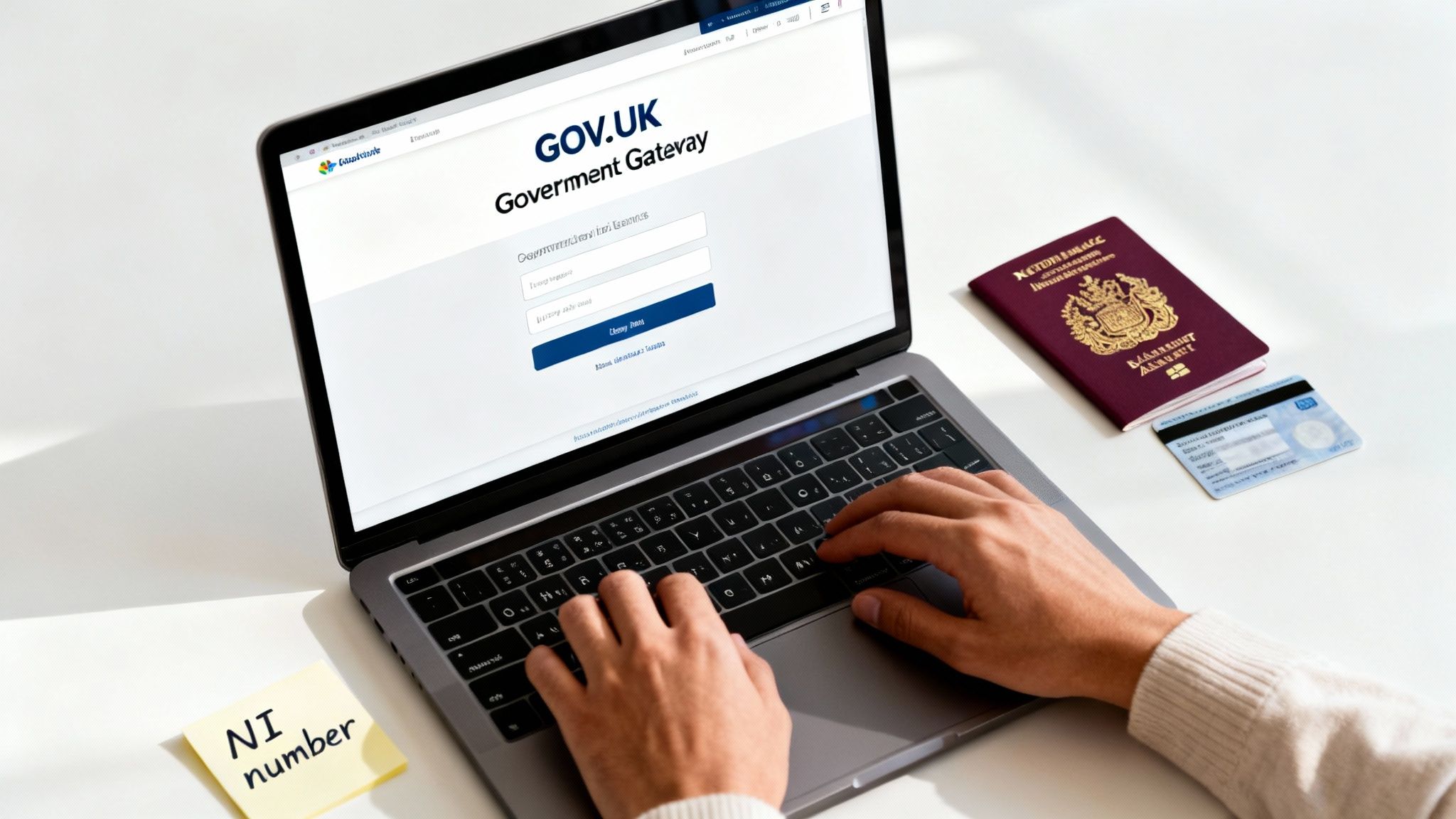
Right, let's get into the practical side of things. Understanding why you need to register is one thing, but actually navigating the GOV.UK website is where many people get stuck. This walkthrough will take you through each part of the online process, from setting up your initial access to submitting the final form, making sure you get it done accurately and without any unnecessary stress.
The entire system is built around your Government Gateway account. Think of it as your digital key to a huge range of government services online, including Self Assessment. If you've ever filed a tax return or used other HMRC services before, you probably already have an account. If not, creating one is your first job.
This initial step is pretty straightforward. You'll be asked for an email address and to create a password. Once you're done, you'll be given a 12-digit Government Gateway user ID.
My Top Tip: Treat your Government Gateway ID and password with the same care you would your online banking details. I'd recommend saving them in a secure password manager, but if you prefer to write them down, store them somewhere safe. You'll need these details every single time you want to access your tax account.
Once you've got your Government Gateway login, HMRC needs to prove you are who you say you are. This is a crucial security step – known as identity verification – to protect your sensitive financial information. HMRC uses the GOV.UK ID Check system for this, which means you'll need to provide details from a couple of official documents.
Be ready with at least two of the following items:
The system will fire off a series of questions based on the documents you choose. For example, if you use your passport, you’ll have to enter the expiry date and your name exactly as it appears. Getting these details spot-on is vital; too many failed attempts can temporarily lock you out of the system.
After successfully verifying your identity, you’ll finally land on the main registration form. This is where you'll give HMRC the core details about yourself and your business activities. The information needed is fairly standard, but having it all ready to go beforehand will make the process much smoother.
Make sure you have this information to hand:
One of the most important pieces of information here is your business start date. This should be the day you officially started trading. If you’re a freelance consultant, that would be the date you sent your first invoice. For a landlord, it's the date you first started receiving rent. Be as accurate as you possibly can.
There's a growing trend of people getting their tax affairs in order early. In fact, HMRC data shows that the number of people filing their tax return on the very first day of the tax year has doubled since 2018. This proactivity often starts with a timely registration, especially for new business owners who need their UTR number to get started. You can read more in the official government report on the Self Assessment campaign.
Once you submit the form, your part is done for now. You'll get an on-screen confirmation, and HMRC will start processing your application. The next thing to do is keep an eye on the post for your Unique Taxpayer Reference (UTR) to arrive.
While the process is designed for anyone to do themselves, plenty of people prefer to have an accountant handle it. If you'd rather focus on your business and leave the tax admin to the experts, our team can manage your registration and ensure all your future tax returns are filed correctly and on time. It’s a great way to remove the stress and ensure you’re compliant from day one.
Hitting ‘submit’ on your registration is a big milestone, but it's not quite the finish line. What comes next is just as important for getting yourself set up for a smooth tax season. Think of it like this: you've just unlocked the door, and now it's time to step inside and get organised.
So, what actually happens after you've gone through the online process? It mostly involves a bit of waiting for the postman and then taking a couple of key actions to get your account fully up and running.
Your first job is to keep an eye on your letterbox. Within a few weeks, you'll get an official letter from HMRC containing your Unique Taxpayer Reference (UTR). This ten-digit number is your unique ID for absolutely everything to do with Self Assessment.
How long does this take?
This letter is incredibly important. As soon as it arrives, file it somewhere safe. You’ll need that UTR to file your tax return, get in touch with HMRC, or give an accountant permission to act on your behalf.
A Common Pitfall to Avoid: Loads of people think getting their UTR is the final step. It isn't. You still need to activate your online account, which is a separate but equally vital task.
The same letter that has your UTR will also give you instructions on how to set up your online Self Assessment account. This step essentially links your new UTR to your Government Gateway ID, giving you access to the digital filing system.
To do this, HMRC will send you a separate activation code in the post, which usually arrives within seven to ten days of you requesting it. Once you have it, you'll need to log back into your Government Gateway account and pop in the code to finalise everything. This is a time-sensitive security check, so don't just chuck the letter in a drawer and forget about it.
While you’re waiting for letters and codes, you can do the most productive thing of all: get your financial records organised. Solid record-keeping is the absolute foundation of a stress-free Self Assessment. Trust me, trying to piece together a year's worth of transactions right before the filing deadline is a recipe for pure stress and potential mistakes.
Start by setting up a simple system. This could be a dedicated spreadsheet or some basic accounting software. The goal is just to track all your business income and expenses as they happen.
Here’s a quick checklist to get you on the right track:
Getting into good habits from day one is a real game-changer. If the thought of managing your own books fills you with dread, looking into professional bookkeeping services can be a smart move. It frees you up to focus on your business, knowing your records are accurate and ready for tax time.
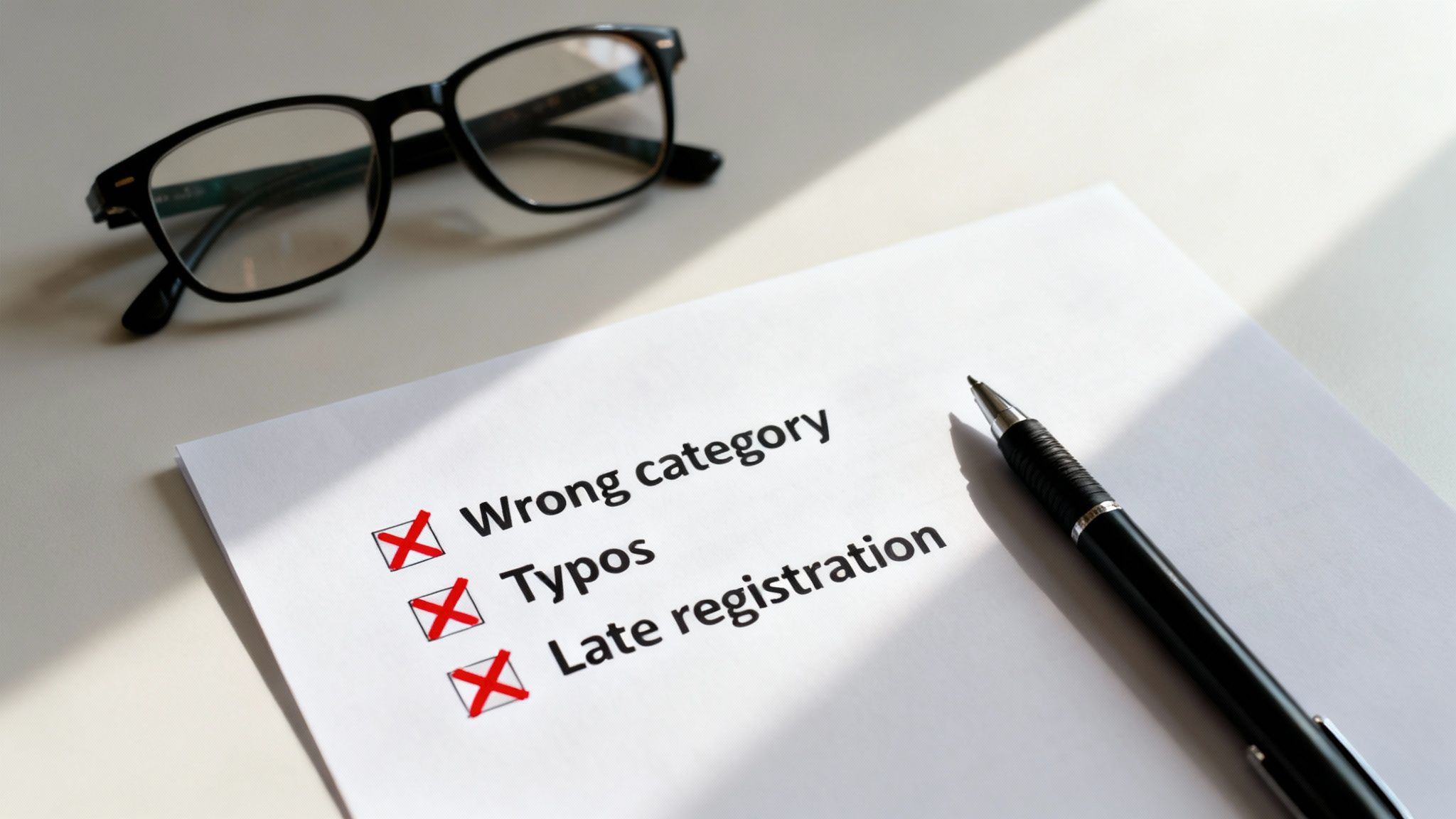
Getting your Self Assessment registration sorted is usually plain sailing. However, I’ve seen a few simple missteps cause some serious delays and even hefty financial penalties for people.
Knowing what these common pitfalls are ahead of time is the best way to make sure your registration goes through without a hitch. It’ll save you a world of stress trying to correct mistakes later on. From minor typos to picking the wrong registration path, these errors are surprisingly common but easy enough to sidestep with a bit of care.
This is the big one. The absolute deadline to register for Self Assessment is 5 October after the end of the tax year you started earning untaxed income.
Let's say you started your freelance career in July 2024. That falls into the 2024-25 tax year, which means you must be registered by 5 October 2025. It’s a non-negotiable date.
Missing it triggers an immediate penalty, even if you don't actually owe any tax. It also creates a nasty domino effect: a late registration means your UTR number will be delayed, which could easily make you miss the online filing deadline of 31 January.
HMRC issues an automatic £100 penalty for failing to register on time. This is just the starting point. Further penalties for late filing and late payment can stack up pretty quickly if you don't get it sorted.
This deadline is so crucial because it gives HMRC the time it needs to process millions of new registrations before the mad rush in January. You can see how effective their reminders are from their own stats on GOV.UK – it really does prompt people into action.
Another common tripwire is choosing the incorrect registration path. The forms and processes for a sole trader, a partner in a business, or someone with rental income are all different. Getting this wrong at the start is a recipe for confusion and administrative headaches down the line.
I've seen it happen in a few different ways:
Take a few extra minutes on the GOV.UK site to confirm your exact circumstances. It really does pay to get it right from the word go. If your business structure feels a bit complex, having a read through some solid tax advice for small businesses can bring some much-needed clarity.
It sounds almost too obvious to mention, but a simple mistake can throw a real spanner in the works. An incorrect National Insurance number, a mistyped name, or the wrong date of birth will get your application bounced by the automated system. This usually happens when people are in a rush.
Likewise, putting in an inaccurate business start date can cause tax complications. That date is what determines which tax year your first return falls into, so it’s absolutely vital to get it right.
My best advice? Double-check every single field before you hit that submit button. A five-minute review now can save you weeks of delays while you wait for HMRC to manually correct things later.
Even with the best instructions, it's totally normal to have a few questions buzzing around when you’re new to Self Assessment. This is the bit where we tackle the common queries we hear all the time from freelancers, landlords, and new business owners. The goal here is to give you clear, straight-to-the-point answers so you can get registered with confidence.
It happens. A lot more than you’d think, actually. Your 10-digit Unique Taxpayer Reference (UTR) is vital for your tax affairs, but that letter it arrived on can easily go missing. Don't panic; getting it back is usually pretty simple.
The fastest way to find it is to log into your Government Gateway account. Your UTR should be right there on your personal tax account homepage. It’ll also be on any previous tax returns you've filed online or on other letters from HMRC, like a "Notice to complete a tax return."
If you can't get online, your next best bet is to call the Self Assessment helpline. They won't just read the number out over the phone for security reasons, but after you answer a few questions, they’ll post it to the address they have on file. Just be aware this can take a week or two to arrive.
Absolutely. This is a classic scenario for anyone with a "side hustle" or those gradually moving into full-time self-employment. The magic number to remember is the £1,000 trading allowance. If your gross income from your self-employed work tops this in a tax year, you must register for Self Assessment.
When you file your return, you’ll declare everything.
HMRC’s calculation will factor in the tax you've already paid through your main job. This makes sure you pay the right amount on your combined earnings without getting taxed twice on the same income.
If your circumstances change—maybe you've closed your side business or sold your rental property—you can't just stop filing. If HMRC has sent you a "Notice to complete a tax return," ignoring it will trigger automatic penalties, even if you don't owe a penny.
You have to formally ask HMRC to take you out of Self Assessment. The easiest way is through your Government Gateway account, where you can complete the necessary online form. Alternatively, you can call the Self Assessment helpline and explain why you no longer meet the criteria.
It's crucial to do this as soon as things change. HMRC will review your situation and, if they agree, will send you a confirmation letter. Don't just assume you're off the hook until you have that official notice in your hands.
Yes, one hundred percent. While the official deadline to register is 5 October following the end of the tax year you started trading in, there’s zero advantage in leaving it that late. In fact, getting registered as soon as you kick things off is one of the smartest admin moves you can make.
Registering early gives you plenty of breathing room to receive your UTR, get your online account properly set up, and start organising your bookkeeping. It gets rid of that last-minute scramble and massively cuts the risk of missing the deadline and copping an instant £100 penalty. Think of it as giving yourself a head start—you'll feel far more in control when the January filing deadline rolls around.
Managing your Self Assessment registration and keeping on top of your tax obligations can feel like a job in itself. At GenTax Accountants, we handle all the complexities for you, from getting you registered to filing your annual returns. This frees you up to focus on what you do best—running your business. Visit us at https://www.gentax.uk to see how we can help.
