



It's a common trap for online sellers: thinking any old accountant will do. But your local high-street accountant, brilliant as they might be with traditional businesses, often completely misses the unique financial pulse of an online store. This can lead to some seriously costly mistakes, like messing up your inventory valuation, missing out on tax opportunities, and giving you a completely skewed view of your actual profits.
For any online brand that’s serious about growth, a specialist accountant for ecommerce business isn't just a nice-to-have for compliance—they're a crucial strategic partner.
The world of ecommerce moves at a totally different pace than a brick-and-mortar business. A local café might handle a few hundred transactions in a day, but a single Shopify store can easily process thousands of individual orders, each one creating its own little data trail.
This sheer volume of micro-transactions is just the start. An online business has to juggle a complex web of financial data that a generalist accountant simply isn't set up to handle efficiently.
Just think about your day-to-day operations:
This infographic really drives home the difference between a traditional accountant’s mindset and the data-driven approach of an ecommerce specialist.
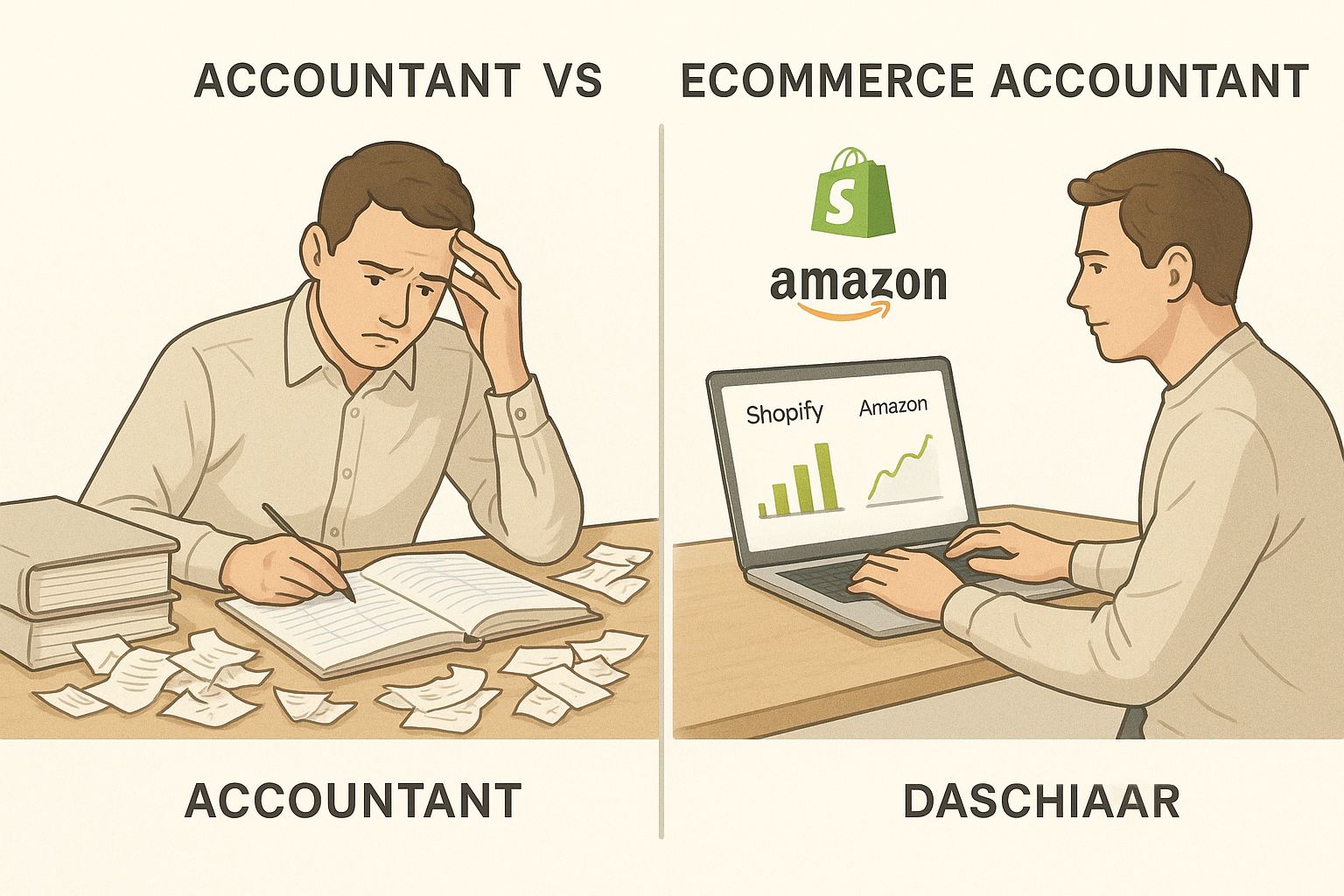
As you can see, an ecommerce expert operates right inside your digital ecosystem, turning what looks like chaotic sales data into clear, actionable financial insights.
A true ecommerce accountant goes way beyond just filing your taxes. They get the entire financial ecosystem of your online store and become a strategic advisor who helps you make smarter decisions.
Let's take a real-world example. I once worked with a fast-growing UK fashion brand whose generalist accountant saw rising revenue and gave them a pat on the back. But when we, as ecommerce specialists, dug into their Shopify data, we found something alarming: their supposed bestselling product had a 40% return rate.
Once you factored in the return shipping costs and restocking fees, that "bestseller" was barely making any money. That’s a critical insight a generalist would almost certainly have missed.
An expert ecommerce accountant doesn't just record history; they analyse your data to help you write a more profitable future. They find the hidden stories in your sales channels, inventory movements, and marketing spend.
To put this into perspective, let's look at the bigger picture. We've created a simple table to show you exactly where the differences lie.
The takeaway is clear: while a generalist ticks the compliance box, a specialist gives you the financial intelligence to actually grow your business.
The UK ecommerce market is an absolute powerhouse. With online sales projected to make up 30.7% of all retail spending by 2025, the financial complexity for sellers is only going to increase. In such a competitive environment—where fashion alone accounts for 29% of all online sales—having specialised financial guidance is no longer a luxury, it's a necessity.

When you start looking for an accountant for your ecommerce business, you need to dig much deeper than just their basic qualifications. Sure, seeing "Chartered Accountant" on their website is a decent starting point, but it's no guarantee they understand the unique financial pulse of an online store.
You need someone who has real, hands-on experience in the digital trenches. Their expertise has to be rooted in the specific tech that powers your business. This isn't just a "nice to have"—it's an absolute deal-breaker.
A specialist ecommerce accountant speaks the language of your software. They won't just know the names; they'll get the data flows, the weird fee structures, and the reporting quirks of every platform you use.
Here’s the technical toolkit they absolutely must have:
An accountant still relying on manual data entry or who doesn't grasp these integrations will quickly become a bottleneck. You’ll end up with messy books and reports you can't trust.
The right accountant doesn’t just use your software; they build an automated, interconnected financial ecosystem. Their goal is to create a system where data flows seamlessly from the moment of sale right through to your financial statements, giving you a crystal-clear, real-time view of your business's health.
Beyond the software, a top-tier ecommerce accountant brings specific knowledge that tackles the most common headaches for online sellers. They should be able to confidently handle the complexities that would leave a generalist accountant scratching their head.
Your ideal candidate needs to prove they have a rock-solid understanding of:
The best way to test their skills? Ask them pointed, scenario-based questions during the interview. Try something like, "Walk me through how you handle a disputed transaction from a Shopify order that was paid for via PayPal," or "Explain how you would account for landed costs on inventory we've just imported from China."
Their answers will tell you everything you need to know about the true depth of their expertise.
So, you know what you’re looking for in an ecommerce accountant. Now, where do you actually find them?
Googling "accountant for ecommerce business" will throw thousands of results your way, but honestly, the best people often aren't found through a generic search. You need to be a bit more strategic.
Start with professional directories. These are a great way to find properly certified professionals. The Institute of Chartered Accountants in England and Wales (ICAEW), for instance, has a searchable database of member firms. Many of them list specialties, so you can filter for those who know their way around ecommerce.
Even better, tap into your own community. Niche online forums and social media groups for UK-based online sellers are absolute goldmines for genuine recommendations. Ask other founders who they trust with their finances. A referral from a fellow store owner is often the most reliable thumbs-up you can get.
Finding a few names is the easy part. Vetting them properly is where the real work begins. This is how you separate the genuine specialists from the generalists who just happen to have good marketing. A little due diligence here will save you a world of pain and costly mistakes later on.
Here’s how to really assess a potential financial partner:
That last point is a big one. I remember a founder who was about to sign with a very cheap firm. Something felt off, so he asked for a detailed quote before committing. It turned out their "low monthly fee" didn't cover reconciling payment gateways or handling VAT returns—pretty essential stuff for his business. The add-on costs would have made them more expensive than the specialist firms he was already looking at.
Your discovery call is the single most important vetting tool you have. This isn't just about ticking off qualifications; it’s about feeling out whether this is a genuine partnership. You need to know they get your vision and can help turn your business goals into a financial strategy.
That initial 'discovery call' is your chance to see if you’re truly on the same page. Don’t let them run the whole show. Come armed with your own pointed questions to see if their services genuinely match your needs.
For some founders, this is the moment they realise they need more than just a bookkeeper; they need strategic oversight. Understanding the role of a fractional finance director can be a real eye-opener if you’re looking for higher-level financial leadership.
This call is all about making sure both of you are perfectly aligned from day one. It sets the foundation for a successful, long-term relationship. With ecommerce now accounting for 30% of all UK retail sales—a number that just keeps climbing—having a financial expert who’s right there with you on your growth journey has never been more critical. You can read more about this sustained growth and its impact on ecommerce on yourecommerceaccountant.co.uk.
You’ve done the hard work and hired an expert accountant for your ecommerce business. That's a huge step, but the real work starts now. The first 90 days are absolutely critical for setting up a smooth, effective partnership that will pay dividends for years to come.
A successful onboarding process isn't just about handing over a shoebox of receipts. Far from it. It’s a structured handover of data, system access, and, most importantly, expectations.
Think of it as building the foundation for your financial future. Get it right, and your new accountant can start adding strategic value almost immediately. Get it wrong, and you’ll just be wasting their time (and your money) on administrative chaos.
To get your accountant up to speed quickly, you need to provide organised access to the core of your business operations. This goes way beyond just bank statements; it's about giving them a secure, read-only view of your entire sales and payment ecosystem.
Your initial handover package should include secure, view-only access credentials for:
Giving them this access from day one allows your accountant to see the full picture, from the initial sale all the way to the final bank deposit. This complete view is essential for accurate bookkeeping and genuine strategic analysis.
Once access is sorted, the very next step is to establish a clear rhythm for communication and reporting. Don't leave this to chance. Agree on a schedule that works for both of you, making sure you’re always on the same page.
A great accountant provides more than just year-end accounts; they deliver regular, actionable insights that help you steer the business. This requires setting up a structured reporting framework from day one.
A non-negotiable part of this is agreeing on a monthly management report. This report should track the key ecommerce metrics that truly matter to your bottom line, such as:
Having organised historical data ready for your new partner can save you hundreds in initial setup fees and helps them spot your business's trends immediately. This whole process can be made even smoother through effective technology transformation in your finance department, ensuring data is clean, accessible, and ready for powerful analysis.

It’s time to stop thinking of your accountant as just a necessary cost for tax season. Think of them as your strategic co-pilot for growth. A proactive accountant for an ecommerce business does so much more than keep you compliant; they’re there to translate your raw financial data into a genuine roadmap for boosting your bottom line.
This shift in mindset starts when you invite them into your key strategic conversations. Don't just hand over reports at the end of the month. Bring them into the planning stages before you make major business decisions.
Your accountant has a unique, unbiased view of your business's financial health. They can spot trends and red flags you might be too close to the action to notice. By tapping into their expertise, you can start making smarter, data-backed decisions that drive real profit.
Consider looping them into discussions around things like:
Your financial data tells a story about what’s working and what isn’t. A great ecommerce accountant is the expert storyteller who can translate the numbers into actionable business intelligence, helping you make fewer guesses and more profitable moves.
Let me share a common but powerful example I've seen play out. A UK-based home decor brand was over the moon with their "bestselling" decorative vase. It flew off the virtual shelves every single month. Their previous, more traditional accountant just saw high sales volume and rising revenue and gave them a pat on the back.
But when they brought on a specialist ecommerce accountant, the first thing they did was a deep dive. By pulling data from Shopify and their shipping software, the accountant uncovered a startling truth.
Once the costs of return shipping, replacement stock, and extra packaging were tallied up, that "bestselling" vase was barely breaking even. It was a classic case of vanity over sanity.
This single insight sparked a complete strategic pivot. The brand sourced a more durable alternative, redesigned their packaging, and ultimately boosted their net profit margin by 12% in just one quarter.
That's the power of having a strategic financial partner. Regular, proactive communication transforms your accounting from a backward-looking chore into a forward-looking engine for growth.
Even once you see the benefits, it's natural to have a few nagging questions before you commit to hiring an accountant. Getting straight answers is the key to moving forward with confidence and making the right call for your brand.
Let's walk through the questions we hear most often from online sellers who are ready to get their finances properly sorted.
You should expect to invest somewhere between £150 to £500+ a month for a proper ecommerce specialist in the UK. Where you land in that range really depends on a few things: your monthly transaction volume, how many sales channels you’re running (like Shopify, Amazon, Etsy), and how complicated your international sales are.
A straightforward, UK-only Shopify store will be at the lower end. But if you're juggling multiple platforms, warehouses, and complex cross-border VAT, the work involved is greater, and the fee will reflect that.
A quick word of warning: be very cautious of unusually low prices. Rock-bottom fees often mean you're not getting genuine ecommerce expertise. It might save a few quid upfront, but it can lead to eye-wateringly expensive compliance mistakes and missed growth opportunities down the road.
Honestly? The best time is just before you feel like you’re drowning in spreadsheets. If you're spending more than a couple of hours a week on bookkeeping, that's precious time you could be using to actually grow the business.
A few clear signs that it's time to hand it over:
Bringing an expert in early means your financial foundations are built correctly from day one. It’s a proactive move that saves you from a messy, expensive clean-up job later. It also means you’ll be set up with the right tools from the start. You can check out our thoughts on the best cloud accounting software for startups to get a head start.
Think of it like this: a bookkeeper is focused on the day-to-day, and an accountant is focused on the bigger picture.
A bookkeeper handles the daily recording of all your financial transactions. Their job is to categorise sales, log expenses, and reconcile your accounts to make sure the data is clean and accurate.
An accountant then takes that organised data and uses it for high-level strategy and compliance. They’re the ones who will prepare your official financial statements, file your tax returns, advise you on how to improve profitability, and help you forecast your cash flow.
Any growing ecommerce business needs both. Many specialist firms, like us, roll these services into one package, giving you a complete financial solution that covers everything from daily entries to strategic planning.
At GenTax Accountants, we don’t just crunch the numbers—we turn your financial data into a clear roadmap for growth. Our fixed-fee packages give you the expert support you need, with no nasty surprises. Book a free consultation today to see how we can help you scale profitably.
